


Already 3,500+ users trust Adaption
Smart WMS software for Value Added Services
Digitize Value Added Services such as repacking, labeling, filling, blending and quality control. Adaption WMS links every VAS activity to the correct inventory, customer order, work instruction and cost registration.
This gives you full visibility into execution, inventory movements and the costs of additional logistics services.
Customer-specific VAS processes from one WMS
Digital execution via the mobile Scan App
Register time, materials and costs directly
Discover in 15 to 30 minutes how Adaption WMS supports your Value Added Services.
"*" indicates required fields
TRUSTED BY LOGISTICS LEADERS SUCH AS
What are Value Added Services in logistics?
Value Added Services, abbreviated as VAS, are additional logistics activities that go beyond standard storage, handling and transport. Examples include repacking, labeling, assembly, filling, quality checks, blending and customer-specific product processing. For logistics service providers, VAS activities are not only an extension of their services. They often represent an important revenue model.
Recognisable challenge
Recording VAS activities in Excel and separate systems
In many warehouses, additional activities are still recorded using paper work orders, spreadsheets and separate instruction documents. As a result, there is no up-to-date overview of progress and it is not always clear which processing steps and checks have already been completed. Materials used and hours worked are also sometimes only recorded afterwards.
As the number of customers, locations and VAS activities grows, this complexity increases rapidly. Without integrated VAS software, duplicate registrations, incomplete traceability and lost revenue can occur because completed activities are not charged to customers, or are charged incorrectly.
Adaption's logistics solution
VAS software as part of the WMS
Adaption incorporates Value Added Services as fully integrated processes within the Warehouse Management System. Each VAS order is linked to the correct customer, order, inventory, batch and logistics workflow. Employees receive digital work instructions via the Scan App or a handheld scanner. During the process, they record quantities, weights, materials, checks and deviations, among other data. Inventory and status information are updated immediately.
The registered activities can then be linked to agreed rates. This makes completed VAS services immediately available for cost control, reporting and onward charging to the customer.
The five benefits of Adaption's VAS software
1. All VAS processes within one WMS
Storage, inventory management, order processing and Value Added Logistics come together in one integrated environment. Employees, planners and administrative staff all work with the same up-to-date data. This eliminates the need for separate VAS registers or manual handovers between different systems.
2. Customer-specific work instructions on the shop floor
Separate instructions and checks can be configured for each customer, product, order or VAS activity. Employees only see the steps relevant to their assignment. Mandatory checks ensure that an assignment cannot be completed until all required activities have been carried out.
3. Full traceability of every processing step
The WMS records who performed a VAS task, when it was performed, and which goods, batches, packaging or materials were used. Deviations, quality checks and photos can also be added to the assignment. This creates a complete audit trail from the original inventory to the processed end product.
4. No lost revenue due to missing registrations
Labour time, materials used, machinery and additional services are recorded during execution. These registrations can be linked directly to the agreed rates for the relevant customer. This makes completed work demonstrable and immediately ready for processing in the invoicing process.
5. Scalable for new customers and services
New VAS activities, customers or locations can be added without setting up a separate administrative process. You can reuse existing workflows or configure new instruction sets for a specific customer or product group. This allows your VAS services to grow without reducing visibility or control.
“Adaption stood out because of their approach: personal contact, fast response and the ability to translate our use cases directly into working solutions.”
Jeroen de Vries, ICT Manager at Dekker Transport & Tank Storage
How does a VAS order work within Adaption WMS?
A Value Added Service is linked to the standard flow of goods within Adaption. The additional processing activity can take place during inbound, during the storage period or shortly before outbound.

1. Create the VAS order
The planner creates a VAS order and links it to the correct customer, order, inventory lot or batch. The required processing activity and its deadline are also recorded. An assignment may, for example, involve repacking pallets, filling a bulk product or applying customer-specific labels.
2. Add digital work instructions
An instruction set is linked to the assignment. It contains the steps, questions and checks that an employee must complete. Examples include:
- Checking the packaging
- Recording the starting and final weight
- Scanning the batches used
- Confirming the correct label
- Recording the materials used
- Adding a photo of the final result
Instructions can be made dependent on the customer, product, location or type of VAS activity.
3. Execution via the Scan App
The employee opens the assignment on a smartphone, tablet or handheld scanner. The Scan App shows step by step which activities must be performed. Goods, locations, packaging and handling units can be scanned. This immediately verifies whether the correct inventory is being used and whether the product is being processed at the correct location.
4. Real-time registration of execution
During execution, inventory movements, quantities, weights, materials used and process data are updated directly in the WMS. This gives the planner a real-time view of which assignments have yet to start, which are in progress and which have been fully completed.
5. Quality control and traceability
Mandatory checks must be completed before an assignment can be closed. Deviations can be recorded with an explanation or photo. The relationship between raw materials, original batches, packaging used and the new finished product is retained. This supports quality control, customer enquiries and audits.
6. Cost registration and invoicing
Based on the registered activities, the system calculates the costs or revenues associated with the assignment. This can, for example, be based on:
- Number of products or packages processed
- Number of labels applied
- Labour time used
- Weight or volume
- Equipment used
- Packaging materials consumed
- A fixed rate per VAS order
The data is then available for verification and onward charging to the customer.
Which Value Added Services does Adaption support?
Adaption WMS supports both common warehouse activities and complex VAS processes for bulk goods and liquids.

Packaging and repacking
Goods can be transferred to a different type of packaging, repacked or prepared for a specific customer or market. The system records which original inventory was used, how many finished packages were produced and which packaging materials were consumed.

Labeling and stickering
Employees receive instructions for applying or replacing product, customer, ADR or shipping labels. Completion can be confirmed through a scan or mandatory check. This provides proof that the correct labels have been applied to the correct goods.

Assembly
Individual components or products can be combined into a new set, package or finished product. The items used are deducted from inventory and the assembled product is registered as new inventory.

Quality checks
Product quality, packaging, temperature, weight, quantities and visual characteristics can be checked during a VAS assignment. Deviations are recorded centrally and may result in inventory being blocked, placed in quarantine or subjected to additional assessment before further processing.
Filling
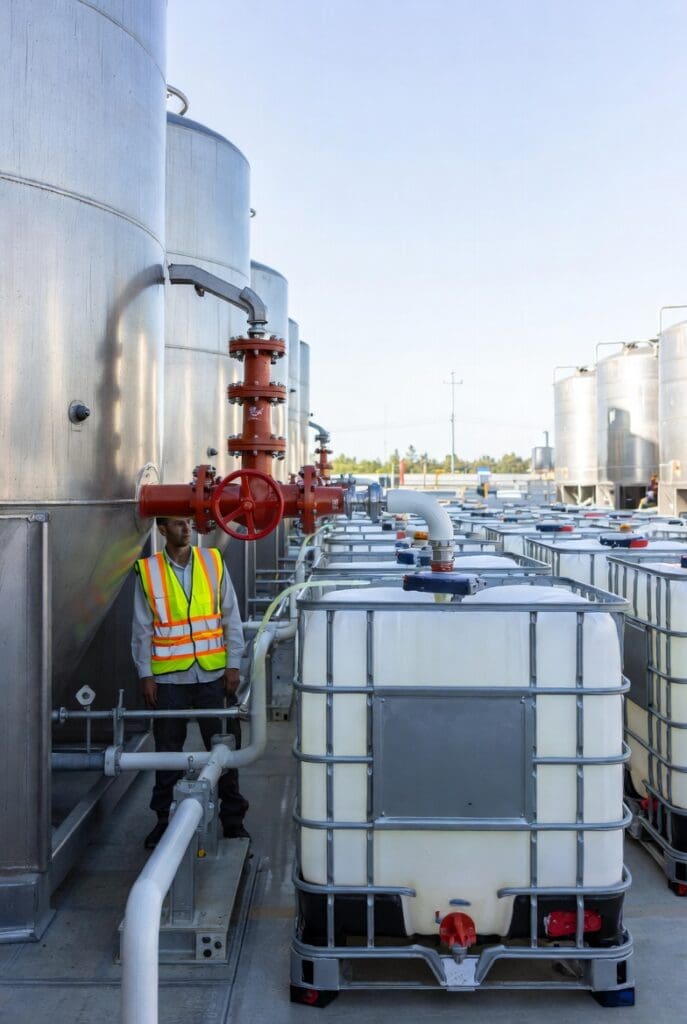
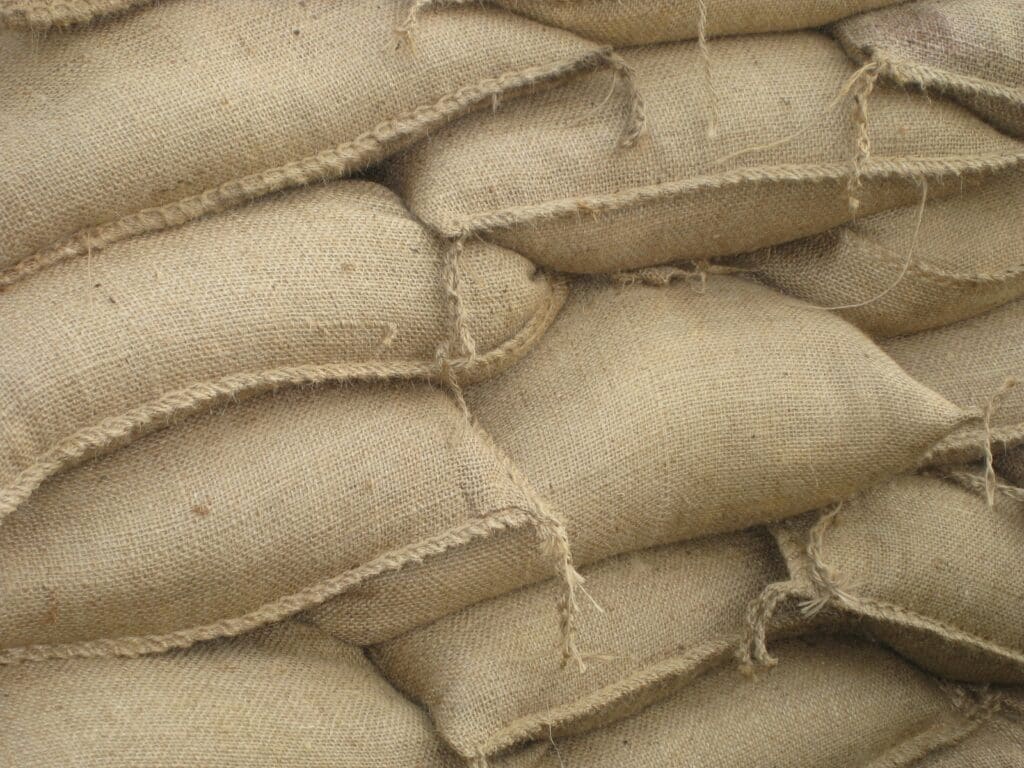
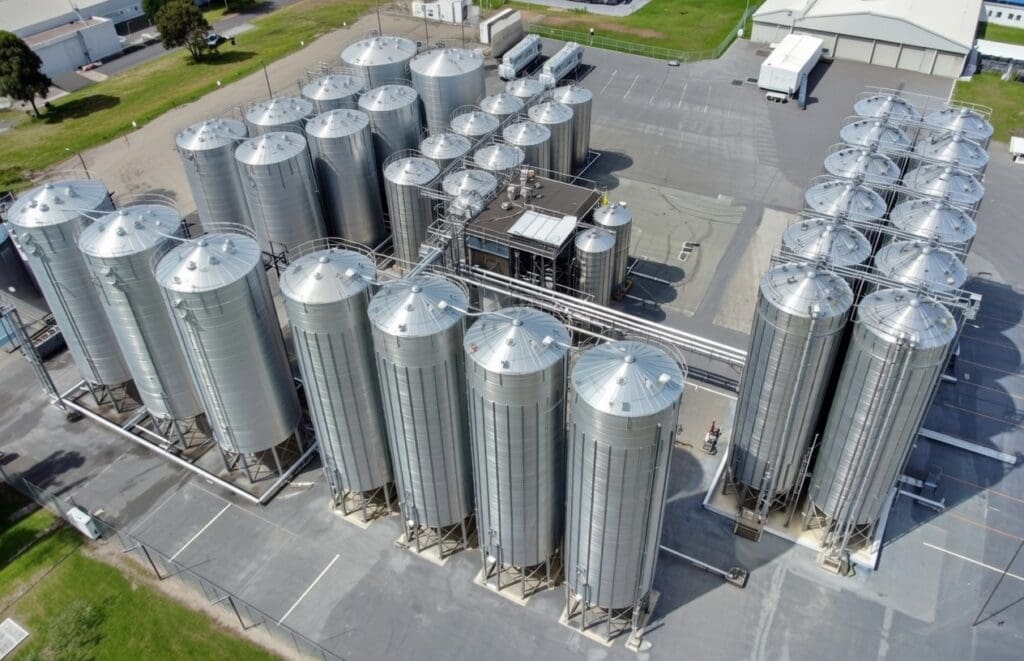
Bulk products can be filled from a tank, silo, tank container or IBC into smaller packaging, such as drums, barrels, bags, boxes or new IBCs. Weights, volumes, batches and packaging relationships are recorded throughout the process.
Decanting and transferring
During decanting, liquids or other bulk products are transferred between IBCs, tanks and tank containers. The system records the source, destination, starting and final quantity, and the batches involved. This ensures that inventory remains fully traceable even when only part of a quantity is transferred.
Mixing and blending
Different products or batches can be mixed to create a new finished product. Adaption records which components were used, the quantities processed and the new product batch that was created. This ensures that the origin of the finished product remains fully traceable.

Melting and product processing
Solid products can be melted and subsequently stored or processed as liquid bulk. The transition from the original inventory to the new product or physical form is fully recorded.

Cleaning, flushing and additional treatment
Cleaning tanks, tank containers, IBCs or packaging can be planned and recorded as a separate VAS activity. The cleaning method used, execution date, checks and associated costs are linked to the correct order, customer or logistics unit.
Seamlessly integrates with your current IT landscape
Adaption integrates seamlessly with your existing IT landscape and connects with the systems you already use. From ERP systems and webshops to carriers and accounting packages, all data flows come together in one logical whole. Thanks to open APIs, virtually any integration is possible. If your system is not listed, we will make it fit.
Automatically register and charge VAS costs
Value Added Services only generate sustainable returns when every completed activity is correctly registered and invoiced.
Within Adaption, rates can be linked to an activity, customer, order or instruction set. During execution, the required data is collected, including labour time, quantities, materials, weight and equipment used. This provides insight into:
- The activities performed
- Operational costs
- Material consumption
- Sales price
- Revenue per customer or activity
This prevents completed activities from being omitted from the invoice.

Value Added Services for bulk logistics
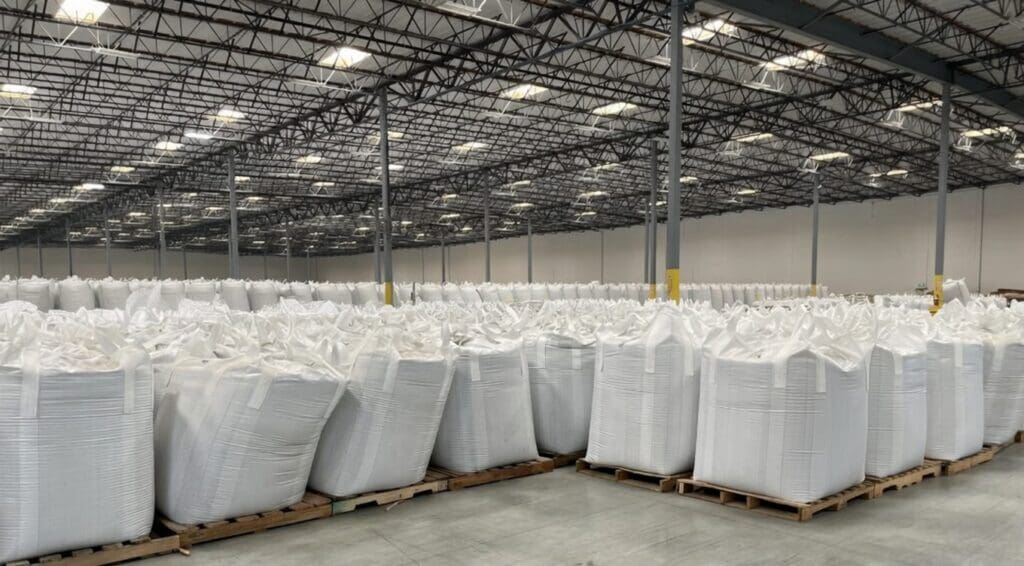
Bulk goods require different VAS processes from standard pallet or general cargo logistics. Quantities may change through filling, blending, melting or transferring, for example, without an entire handling unit necessarily being moved.
Adaption WMS software therefore records not only quantities, but also weight, volume, batch relationships, quality statuses and product transformations. This enables the system to support processes including:
- Tank to IBC
- IBC to tank
- Tank to tank container
- Silo to big bag or sack
- Bulk to packaged finished product
- Multiple raw materials into one blended product
Frequently asked questions about Value Added Services and WMS
VAS stands for Value Added Services. These are additional logistics activities alongside standard storage and transport, such as repacking, labeling, assembly, filling, blending and quality control.
Adaption WMS is suitable for organisations that perform additional warehouse activities, including:
- Logistics service providers and 3PL organisations
- Bulk operators and tank storage companies
- Food and beverage companies
- Chemical logistics and ADR storage
- Manufacturers and distribution centres
- Retail and consumer goods logistics
The software is particularly suitable for organisations that want to manage customer-specific processes, inventory movements and costs within one system.
VAS stands for Value Added Services and VAL stands for Value Added Logistics. In logistics practice, both terms are commonly used for additional activities that add value to products or logistics services.
Adaption supports packaging, repacking, labeling, assembly, quality control, filling, decanting, mixing, blending, melting, cleaning and equipment rental, among other activities.
Yes. Instructions, questions and mandatory checks can be configured by customer, product, activity, location or employee. This ensures that each employee only sees the relevant steps for the assignment concerned.
Employees perform VAS assignments via the Scan App or a handheld scanner. They can scan goods, confirm process steps, enter data and add photos or comments.
Yes. When goods are repacked, filled, blended or otherwise processed, the WMS records the inventory used and the newly created inventory or packaging.
Yes. Rates can be linked to activities, quantities, weights, materials, labour time or equipment used. The registered data is then available for invoicing.
Yes. Adaption supports complex bulk processes such as filling, decanting, mixing, blending, melting and cleaning, including the registration of weight, volume, batches and product transformations.
Yes. Adaption offers integration options for ERP, financial, transport and other operational systems. Data can be exchanged via APIs and other integrations.
Yes. Processes, instructions, rates and customer agreements can be configured separately for each customer and warehouse within one central environment.
See how Adaption makes your VAS processes manageable and profitable
Plan a free demo with Toon Schilder and discover how Adaption WMS connects additional logistics services with inventory management, digital work instructions, quality control and invoicing.
During the demo, you will gain insight into:
How the WMS works in practice
Support for your logistics processes
Integration and expansion possibilities
Plan a free demo with Toon Schilder
Discover in 15 to 30 minutes how Adaption WMS supports your VAS processes.
"*" indicates required fields