

Bonded warehousing
Bonded warehousing: take control of customs inventory with one WMS
Bonded warehousing offers internationally active companies a great deal of flexibility. Goods from outside the European Union can be stored under customs supervision without immediately paying import duties and other charges. The financial benefit is clear. However, the operational execution is often considerably more complex. At any given time, you need to know which goods are under customs supervision, where they are located and which inventory movements have taken place. This becomes difficult when warehouse activities are recorded in different systems.
With Adaption WMS, you connect bonded warehousing directly to your day-to-day warehouse processes. This creates one central overview of your physical inventory, customs inventory, goods movements and associated documents.
In my work at Adaption, I see every day how important it is for customs administration to be connected to operational processes. Bringing these processes together provides greater control and reduces the risk of errors.
Quick navigation:
Written by Marcel Hoogenraad,
Manager Custom Solutions at Adaption
What is bonded warehousing?
Bonded warehousing means storing goods in a customs warehouse. These are generally non-Union goods that have not yet been released for free circulation within the European Union.
As long as the goods remain under the customs warehousing procedure, import duties do not have to be paid. If the goods are subsequently re-exported to a country outside the EU, these import duties may not have to be paid at all.
A bonded warehouse therefore gives organisations the flexibility to decide at a later stage what should happen to the goods. They can be cleared for the European market, placed under another customs procedure or re-exported.
The challenge is not limited to the customs declaration
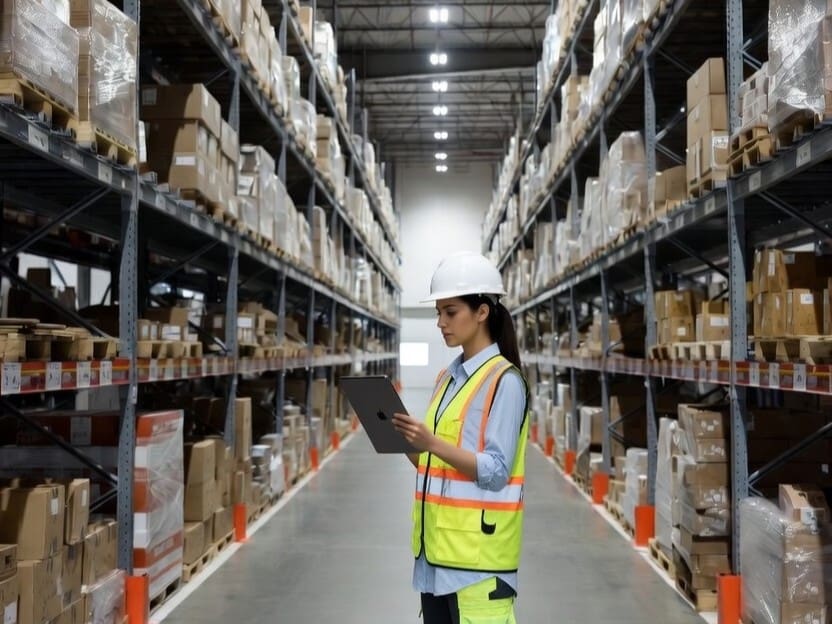
When discussing bonded warehousing, the first things that often come to mind are declarations, permits and customs documents. In practice, however, reliable customs administration begins as soon as the goods are received.
During inbound processing, information such as the goods, quantities, weights, origin, HS codes and customs status must be recorded correctly. Every subsequent movement or handling activity must then remain consistent with that original registration.
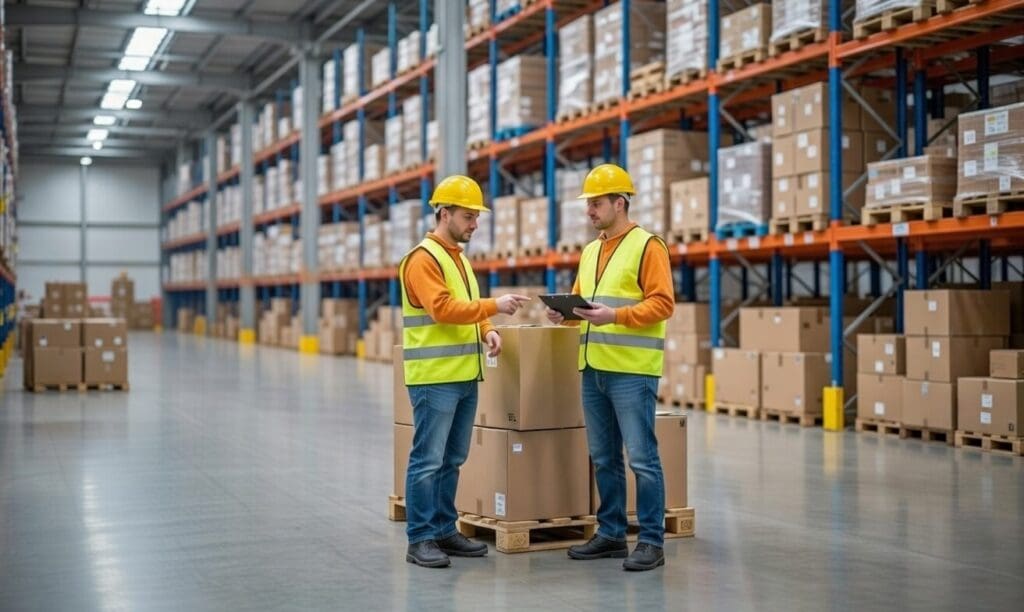
The complexity quickly increases when:
- the same product is held both as free-circulation inventory and as customs inventory;
- only part of a consignment is cleared;
- goods belonging to multiple customers are stored in the same warehouse;
- goods are moved between locations, storage bins, tanks or silos;
- products are repacked, sorted or relabelled;
- part of the inventory is sold within the EU while another part is exported;
- warehouse employees cannot immediately see which customs status applies to an inventory unit.
The physical inventory and the bonded warehouse records must remain aligned at all times. An inventory discrepancy is therefore not only an operational problem, but may also affect compliance with customs obligations.
Why separate systems create risks
When a WMS, customs software solution and an ERP system are used alongside one another, information about the same goods is spread across multiple environments. The WMS may record where inventory is located and which warehouse activities take place, while the customs software records the customs status and associated obligations.
If these systems do not communicate directly, changes are not always processed at the same time. An internal movement may already be visible in the WMS while the bonded warehouse records still show the previous location. Inventory may also appear operationally available for picking even though its customs status does not yet permit release.
Even when each individual system is maintained correctly, a risk arises as soon as the information is no longer synchronised. Employees may then make decisions based on data that is incomplete or no longer current. This not only creates additional administrative work, but may also result in inventory discrepancies, delays and customs compliance issues.
Bonded warehousing therefore requires a direct connection between the physical flow of goods and the digital customs inventory.
Supporting bonded warehousing with Adaption WMS
Adaption WMS brings conventional inventory management and bonded warehouse management together within one logistics platform. The customs status becomes part of the inventory record. This means you record not only which product is stored at a location, but also the status under which it is available and the conditions that apply.
Customs status for each inventory unit
Within Adaption, the customs status can be linked to the relevant inventory. This allows you to distinguish between goods in free circulation, goods under customs supervision and goods in transit. This distinction remains visible throughout inbound processing, storage, internal movements, picking and outbound processing.
Warehouse employees therefore do not have to check multiple administrative systems to determine whether a product may be processed or released. The status is incorporated directly into the operational process.
Linking customs data to inventory from the moment of receipt
With bonded warehousing, it must be clear from the moment of receipt which goods are under customs supervision and which document was used to place them in the customs warehouse. The relevant logistics and customs data is therefore recorded and linked directly to the inventory, including:
- item and goods description;
- quantity and weight;
- country of origin and provenance;
- HS code;
- owner or customer;
- customs status;
- document or declaration numbers;
- storage location;
- handling unit, consignment or batch.
This information remains linked to the inventory when goods are moved, picked, partially cleared or re-exported. This ensures that you can always see which part of a consignment remains under customs supervision, where the goods are located and which customs document applies.
Control over every goods movement
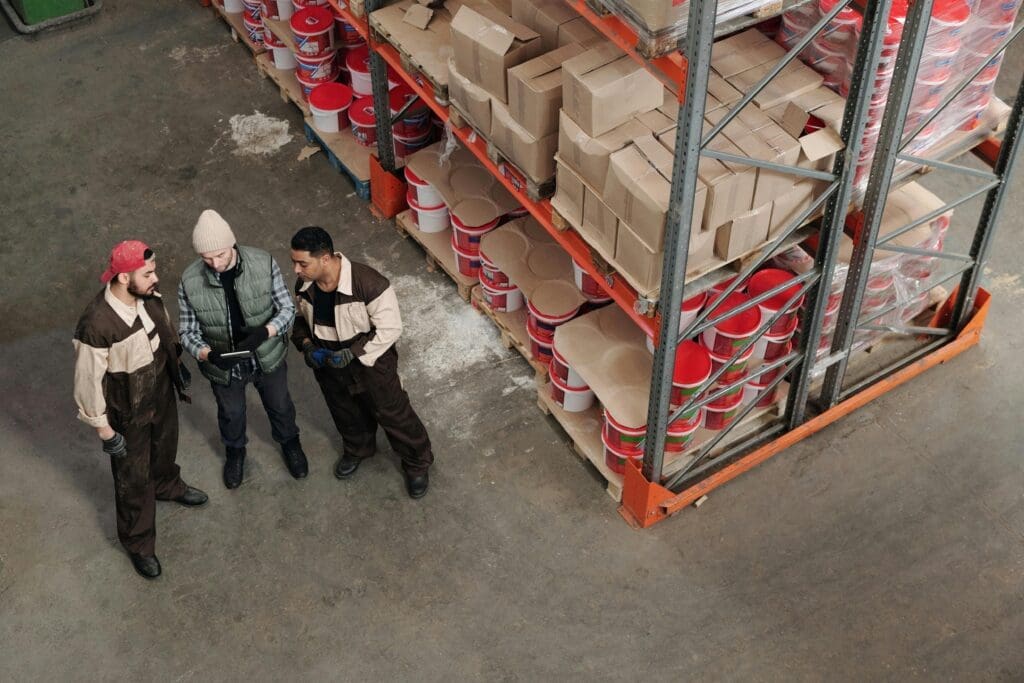
Within a bonded warehouse, it must always be clear where goods are located and which inventory movements have taken place. Adaption records put-away, internal movements, picking, any additional handling activities and outbound movements. The Scan App guides employees through the warehouse process step by step.
By scanning goods and locations, the physical activity is immediately linked to the digital registration. This reduces the risk of goods being stored in a different location from the one recorded in the administration.
Linking documents to the flow of goods
Customs documents are not separate from the warehouse process. They relate to a specific receipt, consignment, inventory movement or outbound shipment. Within Adaption, data from the WMS can be used to prepare and link customs documents. Depending on the selected configuration and integrations, these may include T1 documents, import declarations and export declarations.
This ensures that customs documents remain aligned with current inventory data and goods movements in the warehouse.
Checks during picking and outbound processing
An important risk within bonded warehousing is that goods may be released before the customs status or documentation has been processed correctly. By linking the customs status to the warehouse workflow, the system can support employees in selecting and processing the correct inventory.
In the event of a partial release, the system also continues to show which part of the original inventory has been processed and which part remains under customs supervision. This keeps the current bonded inventory aligned with the actual inventory in the warehouse.
Which organisations benefit from bonded warehouse software?
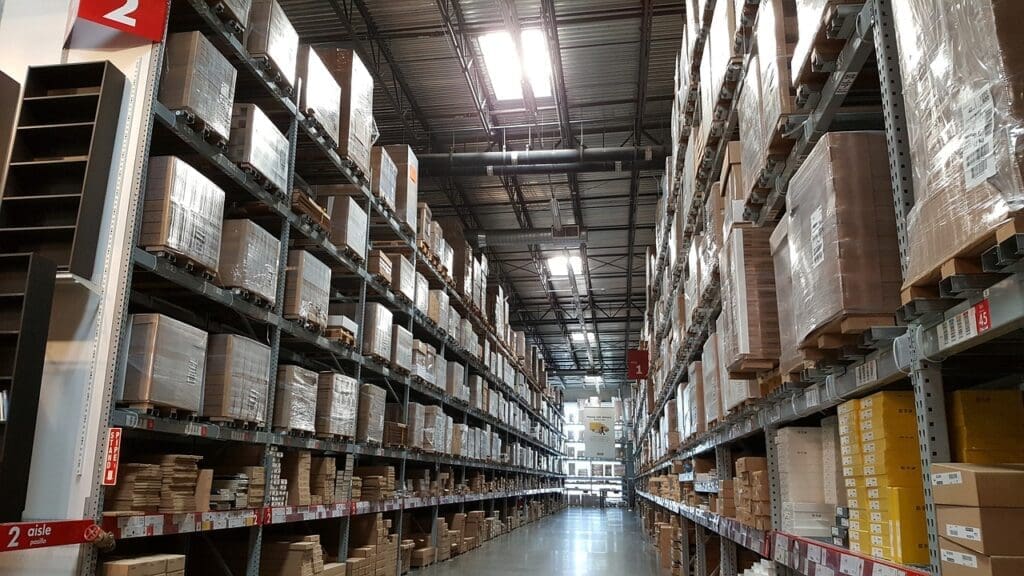
Bonded warehousing software is particularly relevant for organisations that regularly receive, store or distribute non-Union goods, including:
- logistics service providers and 3PL organisations;
- importers and international wholesalers;
- terminals and storage companies;
- forwarding agents and freight forwarders;
- manufacturing companies that use imported raw materials;
- companies with dry or liquid bulk storage.
When free-circulation inventory and customs inventory are stored within the same environment, it is particularly important for the customs status to be incorporated directly into inventory management.
A practical example of bonded warehousing
A logistics service provider receives 600 components from Asia and places them under the customs warehousing procedure. At a later stage, 200 components are cleared for a customer within the EU and 150 components are exported to a customer outside the EU. The remaining 250 components continue to be stored under customs supervision.
Within Adaption, it remains clear which portion has been cleared, exported or is still held as customs inventory. The location, goods movements and associated documents also remain linked to the original receipt.
Conclusion: bonded warehousing as an integrated logistics process
Bonded warehousing does not end at the warehouse door. After goods have been released, re-exported or placed under a subsequent customs procedure, they often need to be scheduled for transport immediately. When warehouse management, customs administration and transport management operate separately, manual handovers are once again required and the risk of errors increases.
Adaption’s Logistics Cloud Suite brings together WMS, TMS and freight forwarding within one platform. This connects warehouse processes, customs statuses, documents and transport files. Adaption WMS makes customs inventory part of the daily flow of goods. From inbound processing and location management to picking, documentation and outbound processing, you maintain a complete overview within one logistics environment.
As a result, bonded storage is no longer a separate administrative process, but an integrated part of your entire logistics operation.
Sources and background information
- Customs warehouse | Dutch Customs
https://www.douane.nl/onderwerpen/goederenvervoer/bijzondere-regelingen/niet-uniegoederen/douane-entrepot/ - 15.50.00 Customs warehouses | Customs Manual
https://kennisbank.douane.nl/handboeken/hdu/douane_entrepots/ - Types of customs warehouses | Customs Manual
https://kennisbank.douane.nl/handboeken/hdu/douane_entrepots/douane_entrepots-soorten_douane_entrepots/ - What is a customs warehouse? Permits, types and administration | Adaption
https://www.adaption-it.nl/wat-is-een-douane-entrepot-en-welke-vergunningsvormen-bestaan-er-in-nederland/ - Customs & clearance in WMS software | Adaption
https://www.adaption-it.nl/customs-clearances-and-warehouse-storage/ - Warehouse Management System | Adaption WMS
https://www.adaption-it.nl/logistics-cloud-suite/warehouse-management-system-wms/ - Bonded Warehouse Software | Gateway
https://www.gateway.nl/nl/diensten/bonded-warehouse/ - Non-location-specific or location-specific VAT warehouse | Dutch Tax Administration
https://www.belastingdienst.nl/wps/wcm/connect/bldcontentnl/belastingdienst/zakelijk/btw/zakendoen_met_het_buitenland/zakendoen_buiten_de_eu/btw_entrepot/btw_entrepot
Would you like to see how Adaption can support your bonded warehouse and customs processes?
Schedule a no-obligation demo. We will be happy to show you how to connect customs statuses, goods movements and inventory under customs supervision with your day-to-day logistics operation.