

3,500+ users already trust Adaption
Dock scheduling software for reducing waiting times at loading and unloading docks
At many logistics companies, trucks arrive at loading bays while the current schedule is not clear to everyone. The result is familiar: congestion, drivers waiting for hours, and a planner constantly handling phone calls and emails to manage slots. Without structured loading and unloading scheduling, you lose time and oversight every day.
Adaption solves this with dock scheduling as an integral part of the TMS. From one visual planning board, you manage all dock appointments and maintain real-time insight into the occupancy of every loading bay. This keeps your operation predictable and efficient at all times.
You can see per dock, carrier, and timeslot what is scheduled and where adjustments are needed.
You reduce waiting times by organizing loading and unloading scheduling realistically and centrally.
You give carriers clear timeslots while maintaining control over capacity and communication.

Schedule a free demo with Toon Schilder
Discover in 15 to 30 minutes how Adaption’s TMS supports your dock scheduling processes.
"*" indicates required fields
TRUSTED BY LOGISTICS LEADERS SUCH AS





Adaption’s TMS for dock scheduling

Recognizable problem
Why loading bays become congested without centralized dock scheduling
In many logistics environments, pressure at the loading bay starts before the first truck even arrives. Planners work with separate Excel overviews and verbal agreements, while the warehouse floor depends on up-to-date information about arrival times, vehicles, and required capacity. As soon as volumes shift or a carrier arrives earlier or later, disruption immediately occurs in dock scheduling.
The problem often lies not in employee commitment, but in the absence of one reliable process for dock management. Docks sometimes remain unused while trucks wait, or multiple vehicles arrive simultaneously at the same loading bay.
Adaption's logistics solution
Dock scheduling in the Adaption TMS: control over every timeslot and every loading bay
The Adaption TMS system includes a fully integrated dock scheduling module. You work with a visual planning board where dock occupancy, timeslot planning, vehicle type, product group, and available capacity come together. This turns loading and unloading dock scheduling from a separate administrative task into an operational management tool that connects transport planning, warehouse operations, and collaboration with carriers.
The 5 benefits of dock scheduling with Adaption TMS software
1. Visual planning board with real-time overview
Through the planning board, you can instantly see which docks are occupied, which timeslots are available, and where disruptions are occurring. Colors and blocks provide immediate insight into occupancy, eliminating the need to maintain separate lists or spreadsheets and keeping loading bay scheduling continuously up to date.
2. Self-service for carriers and less manual coordination
Carriers reserve timeslots through a secure portal based on real-time availability, within the rules you define. This significantly reduces phone calls and emails while allowing the planner to retain full control.
3. Automatic loading / unloading times and improved capacity utilization
For each vehicle type, you set a standard loading or unloading time that is automatically applied to every booking. This prevents timeslots from being too short or too long, optimizes dock utilization, and keeps planning realistic without adding pressure to the warehouse floor.
4. Immediate notifications and control over exceptions
If something changes in the schedule or a vehicle is delayed, involved parties immediately receive a notification via email or system pop-up. This allows you to continue optimizing the loading and unloading process even when capacity shifts, without relying on manual communication.
5. Fully integrated with the TMS
The loading and unloading scheduling module is an integral part of the Adaption TMS system, not a standalone tool. Dock appointments are directly connected to trips, orders, and loading assignments, so changes in transport planning automatically affect dock occupancy.
Prefer to get acquainted first or receive more information before booking a free demo?
We are happy to help, feel free to contact us.
From dock capacity to predictable execution
Good loading and unloading scheduling starts with how you organize capacity in advance. In Adaption, you define which docks are available, which vehicle types fit which loading and unloading docks, and how much time different activities generally require. This makes dock scheduling less dependent on rough estimates and more manageable for planners and warehouse staff. This foundation makes dock management, timeslot planning, and dock appointment scheduling clearer and more efficient. The system helps make realistic decisions while the warehouse floor knows which vehicles are expected and which goods flows need to be prepared.

How do you efficiently set up dock capacity and loading bay scheduling with Adaption?
You set up dock capacity efficiently by defining per dock which loading and unloading activities are possible, how much handling time is generally required, and which vehicles or goods flows are suitable. This ensures loading bay scheduling aligns better with what is operationally feasible.
Within Adaption, you configure availability, time blocks, and conditions per dock. Think of separate docks for inbound, outbound, refrigerated transport, containers, or specific customer flows. This creates a predictable schedule in which loading and unloading appointments align with available capacity. Relevant applications include:
- You schedule loading and unloading moments based on available docks, vehicle type, and expected handling time.
- You link appointments directly to the correct dock, supporting efficient dock management.
- You make scheduling clearer for planners, carriers, and warehouse staff.
- You prevent peak congestion by distributing docks and timeslots more effectively.
Timeslot management for carriers within Adaption dock scheduling software
With timeslot management, you open available time windows in a controlled manner according to the rules you define. Carriers can choose a suitable moment themselves while planners retain control over dock capacity, occupancy, and exceptions.
Planners determine which time windows are available, what conditions apply, and how much capacity is available per dock or loading zone. This ensures all parties work with the same up-to-date information and reduces manual coordination via phone or email.
Practical example: A carrier books an unloading moment for Tuesday morning but later reports a delay. Instead of coordinating again by phone, the appointment can be adjusted within available windows. The planner immediately sees the impact on dock scheduling and can inform the warehouse floor in time.
TMS dock scheduling as the link between warehouse and transport planning
TMS dock scheduling ensures dock appointments are connected to trips, orders, loading assignments, and inventory movements. In Adaption, this data comes together in one up-to-date overview of what is planned, in transit, and ready for loading or unloading.
Dock scheduling provides the most value when it is part of the complete logistics process. By combining transport planning and dock scheduling, trips, loading moments, and warehouse activities can be better coordinated.
This integration is important for transport companies and logistics service providers working with fluctuating volumes, multiple carriers, and short lead times. A delayed truck, changed order status, or full dock schedule becomes visible more quickly, allowing planners to respond sooner. Key benefits of this integration include:
- You connect dock appointments with trips, orders, and loading assignments in the TMS.
- You provide warehouse staff with insight into expected arrivals and departure times.
- You align dock capacity more effectively with current transport information.
- You support transport companies working with many carriers, customers, and loading windows.
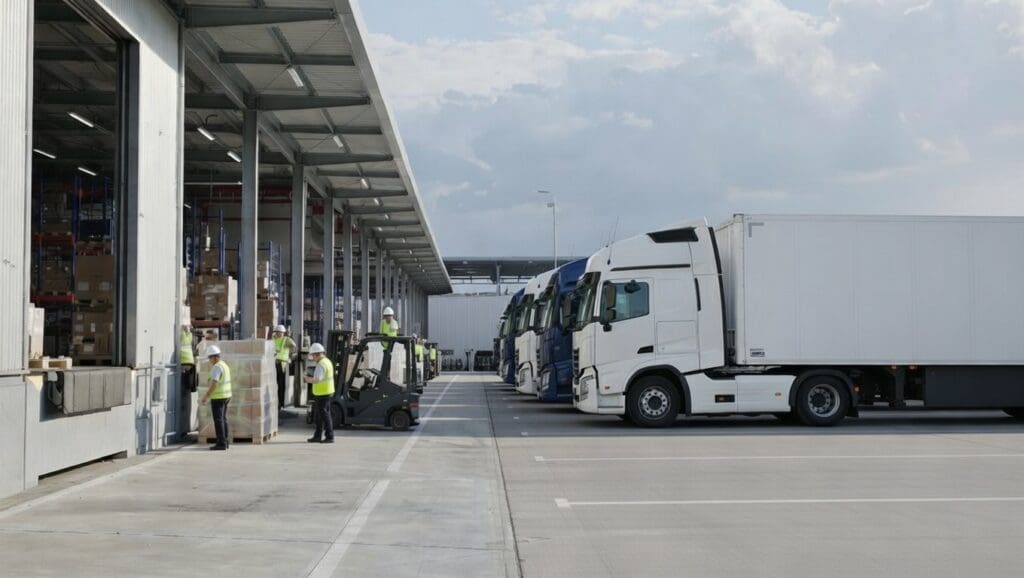
Optimize dock occupancy with insights from the TMS system
With Adaption, you systematically analyze timeslots, arrival times, loading durations, and deviations. This reveals where waiting times occur, which time windows become overloaded, and where capacity can be distributed more effectively.
For planners, this means responding faster to deviations. For management, it provides insight into capacity, reliability, and bottlenecks within the loading and unloading process. This helps reduce waiting times without immediately adding extra docks, staff, or equipment.
Seamlessly integrates with your current IT landscape
Adaption integrates seamlessly with your existing IT landscape and connects with the systems you already use. From ERP systems and webshops to carriers and accounting packages, all data flows come together in one logical whole. Thanks to open APIs, virtually any integration is possible. If your system is not listed, we will make it fit.






Frequently asked questions about dock scheduling
Dock scheduling is the centralized planning of loading and unloading activities based on dock capacity, timeslots, vehicles, and goods flows. For logistics companies, this is important because queues, double bookings, and unclear agreements directly impact costs and lead times. With a well-structured process, you maintain control over inbound, outbound, and loading bay occupancy.
Dock scheduling becomes relevant as soon as you need to coordinate multiple docks, carriers, or loading and unloading activities each day. Especially during peak periods, with varying vehicle types, or when there is extensive manual coordination, centralized planning quickly creates more visibility. This functionality is also highly relevant for organizations aiming to manage transport and warehouse operations within one process.
Dock scheduling software reduces waiting times by aligning timeslots, dock capacity, and vehicle profiles in advance. As a result, trucks are less likely to arrive simultaneously, and planners can identify bottlenecks earlier. By recording arrival, start, and departure times, you can reduce truck waiting times based on factual operational data.
Timeslot management focuses on making timeslots available, monitoring them, and adjusting them for loading and unloading activities. Timeslot planning focuses on actually assigning vehicles, carriers, and orders within those available moments. In Adaption, both come together, allowing planners to stay in control while giving carriers clear scheduling options.
Dock scheduling within Adaption TMS works through a visual overview of docks, reservations, vehicle types, and available times. Planners can configure rules defining which carrier or vehicle category may book which dock. This ensures operational planning aligns more effectively with transport planning, capacity, and warehouse status.
Yes, through the carrier portal, external partners can reserve timeslots or propose changes within the rules you define. This prevents appointments from becoming fragmented across phone calls, emails, and separate Excel files. The planner retains control over dock appointment scheduling, confirmations, and exceptions.
Adaption connects loading and unloading scheduling with relevant warehouse processes, such as order status, loading assignments, and goods availability. This gives warehouse staff better visibility into which shipments are expected and what preparation is required. The integration with Adaption WMS helps align planning and execution more effectively.
Dock scheduling for transport companies often focuses on flexibility, trip building, and coordination with multiple customers or locations. For shippers, the emphasis is more often on inbound, outbound, and loading bay availability. Adaption supports both situations because TMS dock scheduling, transport planning with dock scheduling, and dock management all come together within one platform.
Take your next step toward reducing waiting time at the dock
Would you like to know how Adaption can optimize your loading and unloading process and how timeslot management fits within your existing warehouse and transport planning? Schedule a free demo with Toon Schilder. In a short conversation, you discuss your current process, bottlenecks in dock occupancy, and the possibilities within Adaption.
During the demo, you gain insight into:
How the TMS works in practice
Support for your logistics processes
Integration and expansion possibilities
Or contact us via:
Schedule a free demo with Toon Schilder
Discover in 15 to 30 minutes how Adaption’s TMS system supports your dock scheduling processes.
"*" indicates required fields