


Over 3,500+ users trust Adaption
Consolidation, groupage, and multi-stop planning for shippers and carriers
Many transport companies and shippers still work with separate planning tools or spreadsheets that cannot automatically combine shipments into efficient trips. The result is that trucks drive half empty, less-than-truckload transport becomes unnecessarily expensive, and distribution routes cover more kilometers than necessary.
Adaption helps you connect individual orders, warehouse flows, and transport planning into one process. With Adaption’s TMS System, you can plan trips more intelligently and directly manage load factor, costs, and delivery reliability.
Planners combine orders into executable trips without using separate Excel files.
Shared transport becomes transparent per order, customer, route, and carrier, so costs can be distributed correctly.
Multi-stop trips and LTL planning align better with dock planning and warehouse operations.
Discover in 15 to 30 minutes how Adaption’s TMS system supports your consolidation, groupage, and multi-stop processes.
"*" indicates required fields
TRUSTED BY LOGISTICS LEADERS SUCH AS





Adaption’s TMS for combining trips
Recognizable problem
Why transport planning gets stuck with partial shipments and multiple stops
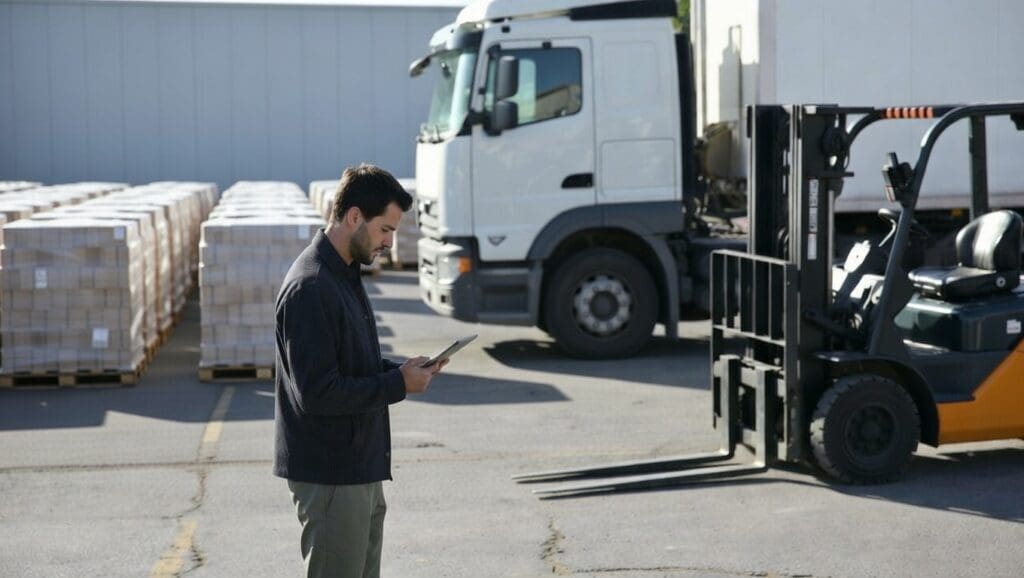
Many logistics service providers grow in the number of customers, routes, and exceptions, but their planning does not always grow with them. A shipment is registered late, a pallet still fits, or a delivery address changes. Without a central system, fragmentation arises between order administration, warehouse, planning board, freight documents, and invoicing.
This becomes even more difficult with groupage transport because each order has its own destination, time window, service agreement, and cost center. Planners want to consolidate shipments but often lack real-time insight into loading meters, weights, volumes, and already planned stops. The result is that less-than-truckload transport is combined too late and shared transport is insufficiently utilized. That is why one logistics software environment is needed in which orders, warehouse information, planning, documents, and execution come together.
Adaption's logistics solution
Adaption TMS: one platform for consolidated transport planning
Adaption TMS supports logistics companies in planning, combining, and executing shipments within one integrated cloud environment. Orders from the Warehouse Management System and international files from the Freight Forwarding Software can be linked to transport planning, so you can quickly see which orders can be transported together, which route makes sense, and which documents are needed.
The 6 benefits of consolidation, groupage, and multi-stop with Adaption TMS software
1. Better capacity utilization
Adaption shows which shipments fit together geographically, in terms of time windows, and loading capacity. This allows you to consolidate freight before it becomes separate transport orders, resulting in fewer empty kilometers and a higher load factor.
2. Less manual planning
The system helps planners combine orders based on region, date, volume, weight, and service agreements. A planned trip remains adjustable when an extra order comes in or when part of the load has already been consolidated.
3. Complete documentation per shipment and trip
Freight documents, loading lists, e-CMRs, and other transport documents are automatically generated for each consolidated load or groupage shipment. This saves administrative time and reduces the risk of errors in cross-border transport and European partial shipments.
4. Clear cost allocation
With shared transport, it must be clear which part of the trip belongs to which order, customer, or shipment. Adaption supports pricing agreements, cost allocation, and reporting, so groupage transport does not end in manual post-calculation.
5. Better integration with warehouse management
From the WMS software, the warehouse can see which orders depart together and which loading sequence is required. This prevents partial shipments, pallets, or parcels from being prepared too early or too late.
6. More control over execution
Planners track the status of trips, stops, and documents within the same environment. In the event of delays, route changes, or additional stops, it remains visible which customers, goods, and costs are affected.

Prefer to get acquainted first or receive more information before booking a free demo?
We are happy to help, feel free to contact us.
Consolidation: combining shipments into a better transport plan
What is consolidation in logistics planning?
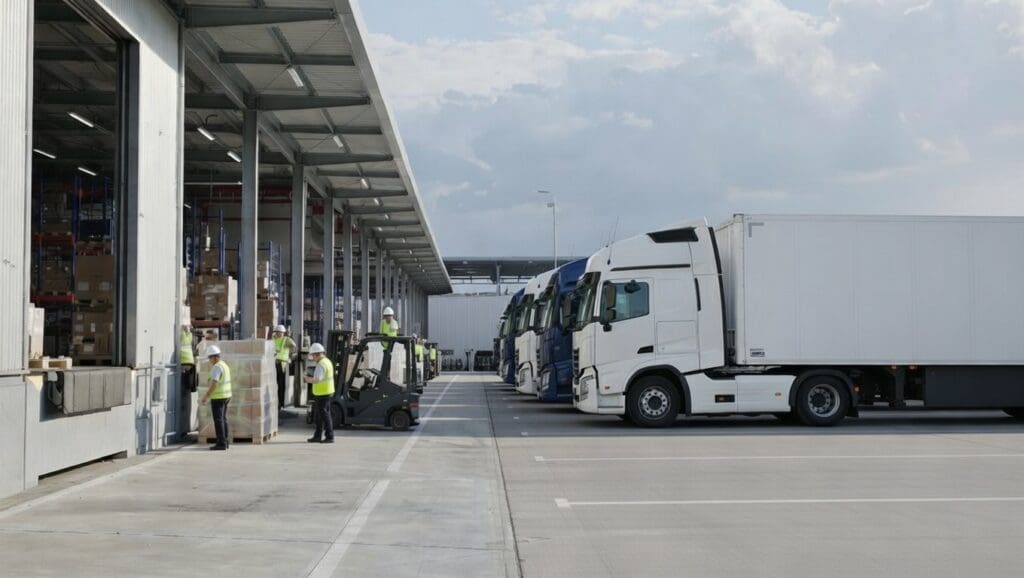
Consolidation means that shipments, orders, or transport flows are bundled in advance into a more efficient transport plan. The planner looks not only at individual shipments but also at volumes, routes, customers, departure times, and available capacity.
How does Adaption help with consolidation?
Adaption brings together transport orders, warehouse data, and planning information in one system. This allows planners to see earlier which orders can be transported together, which trips are already planned, and where capacity is still available. A consolidated plan prevents shipments from unnecessarily being executed as separate trips.
Practical example: A logistics service provider has daily separate orders for Germany, Austria, and Switzerland. Adaption shows which shipments can be combined in the same departure direction and which order is better postponed to another trip.
Groupage transport: efficiently combining small shipments
What is groupage in transport planning?
Groupage in transport planning means that smaller shipments from one or more customers are combined into one transport movement. This is widely used in general cargo transport, pallet transport, LTL, and European groupage, where individual orders are too small for a full truckload.
How does Adaption optimize groupage transport?
Adaption TMS helps planners group orders based on destination, volume, weight, loading meters, time windows, and carrier agreements. This allows the planner to quickly see which shipments can travel together and which order still fits within an existing trip. As a result, shared transport is better utilized without additional manual checks.
Practical example: A planner has six pallet shipments heading to Northern France and four smaller parcel shipments for the same region. Adaption shows that these shipments can be combined into one groupage trip, including loading sequence and delivery windows.

Multi-stop planning: one trip with multiple unloading points
What is multi-stop in transport planning?
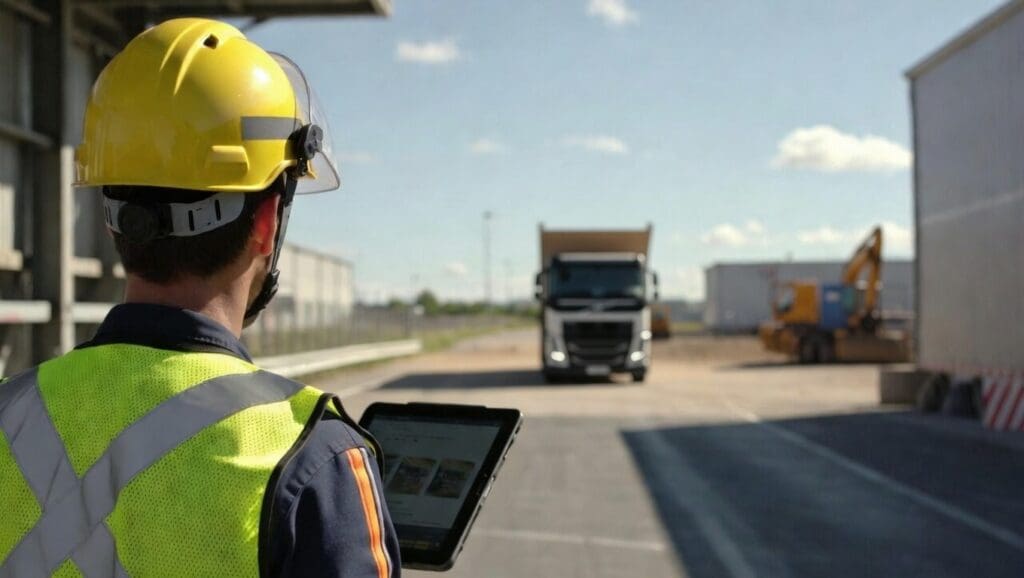
Multi-stop means that one vehicle visits multiple delivery addresses within the same trip. This is common in multi-stop trucking, multi-city routes, and round trips or distribution routes, where the sequence of stops directly affects driving time, service agreements, and loading order.
How does Adaption optimize a trip with multiple unloading points?
Adaption supports multi-stop planning by linking stops to order information, time windows, capacity, and execution status. The planner immediately sees whether an additional unloading address still fits within the route and what the impact is on loading, driving time, and planning. The warehouse also works more efficiently because it is clear which goods must be loaded first or last.
Practical example: A truck drives a route with seven delivery addresses in the Randstad area. Later, an extra order comes in for a location close to stop four. Adaption helps determine whether this order still fits within the same trip with multiple unloading points, without making the route or loading order illogical.
Seamlessly integrates with your current IT landscape
Adaption integrates seamlessly with your existing IT landscape and connects with the systems you already use. From ERP systems and webshops to carriers and accounting packages, all data flows come together in one logical whole. Thanks to open APIs, virtually any integration is possible. If your system is not listed, we will make it fit.


What distinguishes consolidation, groupage, and multi-stop?
Consolidation, groupage, and multi-stop are related, but each has a different role in transport planning. Consolidation is about bundling orders and transport flows into a smarter overall plan in advance. Groupage transport is then mainly about transporting smaller shipments together in one load. Multi-stop focuses on executing that trip, where one vehicle visits multiple unloading addresses.
The difference therefore lies in the planning level. With consolidation, you look at the total order flow and available capacity. With groupage, you look at which shipments fit together in one transport. With multi-stop, you look at the best route, stop sequence, and loading order.
One system for consolidation, groupage, and multi-stop
From separate planning to one coherent transport process
Adaption supports these steps within the same TMS system. This allows a planner to assess from one order flow what can be bundled, which shipments can be transported together, and how the trip with multiple unloading points can best be executed. In this way, consolidation, groupage, and multi-stop planning no longer remain separate processes alongside each other. Planning, warehouse, and execution work with the same up-to-date information on capacity, route sequence, costs, time windows, and feasibility.
Frequently asked questions about consolidation, groupage, and multi-stop
You choose Consolidation, Groupage, and Multi-stop when shipments are too small for a full load but can logically be combined with other orders. LTL is suitable for this because capacity is shared between multiple shipments. Adaption helps determine which orders fit together based on route, capacity, and time windows.
Adaption links transport orders to warehouse information, planning rules, pricing, and documents. This means a planner no longer has to manually check whether an order fits within an existing trip. Shipments can be digitally selected, planned, adjusted, and monitored.
Errors often arise when order data, loading data, and route planning are stored in different systems. Adaption prevents this by linking transport and groupage to the same source data. As a result, quantities, weights, loading meters, time windows, and delivery information remain consistently available for planning and execution.
For international shipments, groupage transport often works with hubs, fixed corridors, and local distribution partners. For European groupage, Adaption keeps track of which shipment is in which stage, which documents are required, and which carrier is responsible. This keeps groupage transport manageable across multiple countries and logistics partners.
Yes, Adaption can support pallet transport and general cargo transport within the same trip when capacity, loading sequence, and delivery agreements align. The system uses data such as volume, weight, number of pallets, parcels, and delivery addresses. This allows the planner to see whether a combination is practically feasible.
Adaption shows what an extra stop means for the route, driving time, loading sequence, and time windows. This is especially important in multi-stop trucking, multi-city routes, and round trips/distribution routes. This allows a planner to quickly determine whether an extra order still fits or should be planned on another trip.
Consolidated transport can reduce costs because loading space is used more efficiently and fewer separate trips are needed. At the same time, service quality remains high only when customer agreements, documents, and delivery windows are properly monitored. Adaption supports this by keeping every order within the combined trip traceable.
Adaption TMS can work together with Adaption WMS, allowing the warehouse and transport planning to use the same order information. The warehouse sees which shipments depart together and which loading sequence is required. This is especially helpful for partial transport, split shipments, and trips with multiple unloading points.
Consolidation mainly provides greater control over capacity, costs, and planning. Planners can identify earlier which shipments can be combined and prevent individual orders from being transported separately unnecessarily. For logistics service providers, this means less manual work, better vehicle utilization, and more control over execution.
Discover how to combine Consolidation, Groupage, and Multi-stop more intelligently
Would you like to know how Adaption can support your planning for consolidation, groupage transport, multi-stop trucking, and LTL? Schedule a free demo with Toon Schilder and discuss how your orders, warehouse flows, trips, and invoicing can align better.
During the demo, you will gain insight into:
How the TMS works in practice
Support for your logistics processes
Integration and expansion possibilities
Or contact us via:
Schedule a free demo with Toon Schilder
Discover in 15 to 30 minutes how Adaption’s TMS system supports your consolidation, groupage, and multi-stop processes.
"*" indicates required fields