

Rail transport
Intermodal transport and the role of rail in European bulk and container chains in 2026
For many shippers and freight forwarders, intermodal transport is once again high on the agenda. Not because rail freight is new, but because pressure on road transport is increasing. Driver shortages, congestion, emissions targets, toll developments, and stricter customer requirements around CO2 are making rail an increasingly serious alternative for European long-distance flows.
For bulk goods and containers, rail is especially interesting on fixed corridors with sufficient volume, predictable frequency, and good terminal connections. At the same time, the shift from road to rail is not straightforward. The reliability of European rail networks is under pressure due to engineering works, border crossings, limited terminal capacity, and differences between national rail systems.
Quick Navigation:
- What is intermodal rail transport?
- Why is interest in rail growing in 2026?
- Which European rail corridors are relevant for Dutch shippers?
- Which operators play a role?
- Capacity and reliability: where does the market stand in 2026?
- What barriers do shippers face when shifting from road to rail?
- Practical examples
- Conclusion
Intermodal rail transport in Europe
This article provides an up-to-date overview of intermodal transport by rail in 2026: which corridors are relevant for Dutch shippers, which operators and network developments stand out, where the bottlenecks are, and how to assess in practice whether rail fits your supply chain.
What is intermodal rail transport?
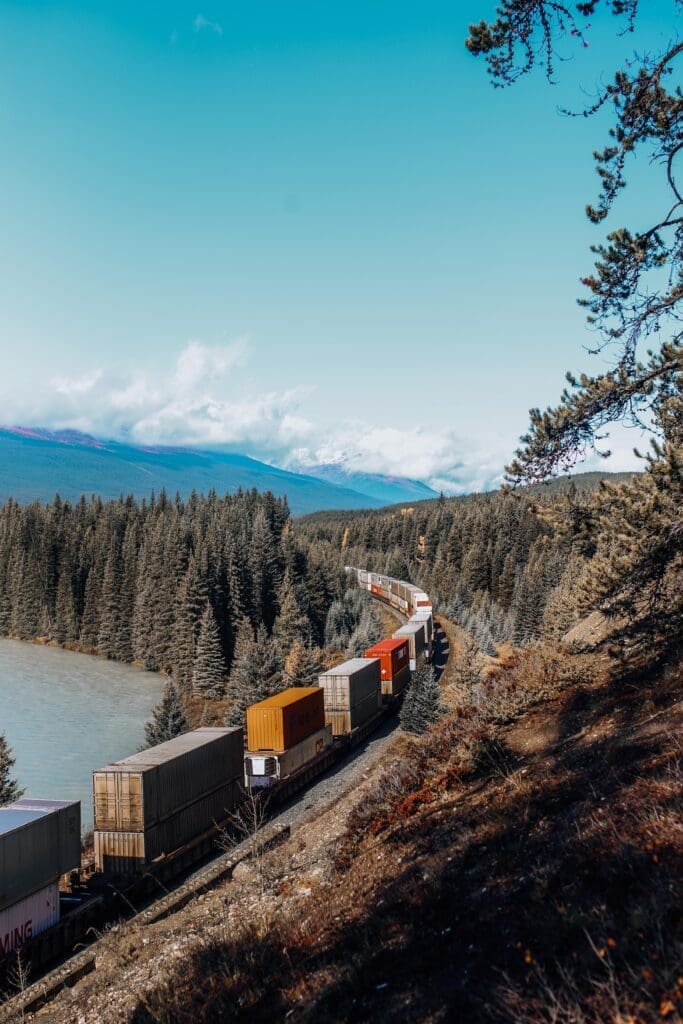
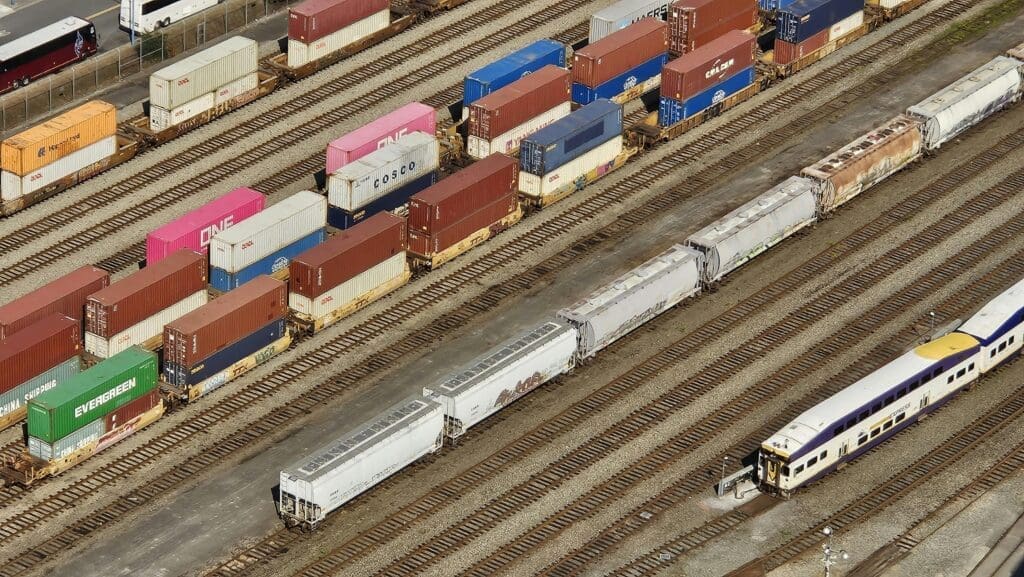
Intermodal transport means that goods are transported in a single loading unit using multiple modalities. Think of containers, tank containers, swap bodies, or trailers that are moved partly by truck and partly by train, inland waterway, or short sea.
In intermodal rail transport, the main leg takes place by rail. The truck is mainly used for pre-carriage to the terminal and onward transport to the final destination. This makes rail particularly relevant for longer distances, fixed flows, and goods with sufficient planning margin.
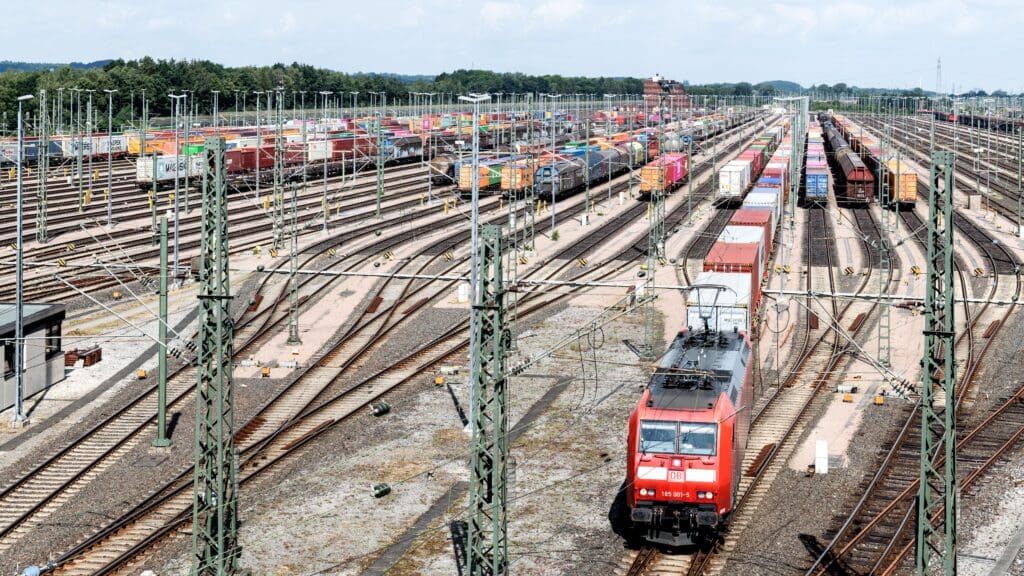
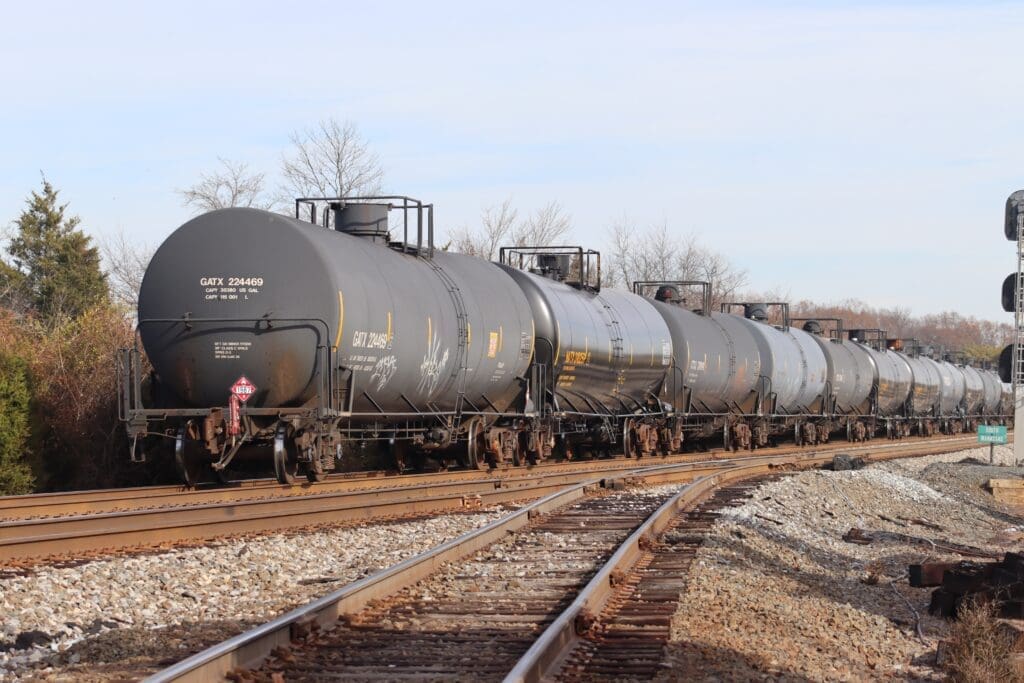
For containers, this often involves maritime flows from ports such as Rotterdam, Antwerp, and Hamburg to inland terminals in Germany, Italy, Austria, Poland, Czechia, or Hungary. For bulk goods, it more often involves block trains, tank containers, silo solutions, or specific wagon types for chemicals, agricultural bulk, minerals, steel, or construction materials.
Why is interest in rail growing in 2026?
Interest in rail is driven by three developments.
First, shippers are looking to reduce their dependence on road transport. Road transport remains indispensable for flexibility and fine-meshed distribution, but it is vulnerable over long distances, in the context of driver shortages, and on congested border routes.
Second, pressure is increasing to demonstrably reduce transport emissions. On many European corridors, rail has a more favorable CO2 profile than full road transport, especially when trains are electric and well loaded.
Third, governments and operators are investing in intermodal networks. The European TEN-T approach focuses on better connections between ports, terminals, rail corridors, and urban nodes. Emphasis is placed on, among other things, longer trains, better terminal capacity, and improved cross-border connectivity.
Which European rail corridors are relevant for Dutch shippers?
For Dutch shippers, the most important corridors are those connected to Rotterdam, Moerdijk, Tilburg, Venlo, Duisburg, and other inland hubs. In practice, this involves several main axes.
1. The Netherlands, Germany, and Italy
The north-south corridor towards Northern Italy remains one of the most important intermodal axes in Europe. Goods flows run via the Netherlands and Germany to terminals such as Busto Arsizio, Novara, Melzo, Verona, and other Northern Italian hubs.
This corridor is relevant for containers, tank containers, chemicals, automotive, retail, machine parts, and industrial goods. For shippers with regular volumes to Lombardy, Piedmont, or northeastern Italy, rail can be a strong alternative to long road routes.

2. The Netherlands, Germany, and Central Europe
Towards Poland, Czechia, Austria, Hungary, and Slovakia, the role of rail is growing as a link between North Sea ports and industrial regions. These corridors are relevant for manufacturers, automotive suppliers, bulk flows, and container cargo that needs to move further into Europe.
For Dutch freight forwarders, Germany and Poland are particularly important link markets. Duisburg plays a major role here as a gateway, because many international rail connections are bundled there.
3. The Netherlands, Spain, and Portugal
Connections towards Iberia are gaining importance. New and strengthened services between Duisburg and Barcelona show that Spain is becoming more firmly connected to the European intermodal network. From Barcelona, connections to Tarragona, Madrid, and Seville are relevant, among others.
Short sea also remains an important modality for Iberia. In 2026, for example, CLdN announced a new LoLo container service between Rotterdam and Porto. For shippers, this means that rail and short sea do not exclude each other, but can both be part of a multimodal route choice.
4. The Netherlands, the UK, and Ireland
For the United Kingdom and Ireland, short sea plays the main role, but the chain is increasingly organized on a multimodal basis. In 2026, CLdN expanded its position in this market by acquiring Samskip activities between continental Europe, the UK, and Ireland. This mainly strengthens the combination of container services, door-to-door transport, road, rail, barge, and short sea.
For Dutch shippers with flows to Dublin, Cork, Belfast, Hull, Tilbury, or Grangemouth, this is relevant because frequency and equipment availability directly affect planning and reliability.
Which operators play a role?
The European intermodal rail market consists of operators, terminals, railway undertakings, short sea shipping companies, and logistics service providers. For Dutch shippers and freight forwarders, the following names are among those that are relevant:
- Hupac, strong on the north-south corridors towards Switzerland, Italy, Germany, and Spain;
- CLdN, active in short sea, RoRo, LoLo, and multimodal door-to-door chains;
- Kombiverkehr, important in continental intermodal networks;
- Lineas, with a strong position in Belgium, France, and industrial rail flows;
- Rail Cargo Group, relevant towards Austria, Central Europe, and Southeastern Europe;
- TX Logistik, Captrain, and LTE, active in international rail operations;
- terminals and inland hubs such as Rotterdam, Moerdijk, Venlo, Tilburg, Duisburg, Melzo, Novara, Busto Arsizio, and Barcelona Combiconnect.
For a shipper, the operator is not the only important factor. Terminal choice, frequency, cut-off times, equipment, onward transport, and the reliability of the total network are at least as important.
Capacity and reliability: where does the market stand in 2026?
The market is moving in two directions at the same time. On the one hand, investment is being made in additional capacity and new services. For example, Hupac started a new shuttle between Duisburg DGT and Novara CIM at the beginning of 2026, with six roundtrips per week. The Duisburg-Barcelona connection will also be added in June 2026, with three weekly roundtrips. Services like these increase choice for shippers on long corridors.
On the other hand, reliability remains a bottleneck. Engineering works on the German rail network and on key Alpine routes in particular affect punctuality and available train paths. For international intermodal chains, this matters because a delay on one section can affect terminals, onward transport, and customer deliveries.
That is why the market is shifting from simply “more rail capacity” towards “better corridor management”. Operators are increasingly working with hubs, higher frequencies, and alternative routes to absorb disruptions. For shippers, this means that rail planning is not only about the price per container or tonne, but also about buffer time, cut-off discipline, and corridor choice.
What barriers do shippers face when shifting from road to rail?
Shifting to intermodal rail transport requires preparation. The main barriers are practical in nature.
- Less flexibility than road transport: A truck can be rescheduled relatively easily. A train runs on fixed slots, terminal windows, and cut-off times. This requires tighter planning upfront.
- Terminal dependency: Rail only works well when the terminals fit the origin, destination, and planning. A low-cost rail connection is worth little if pre-carriage or onward transport becomes too long, expensive, or uncertain.
- Volume and frequency: Rail is strongest with regular volumes. For occasional shipments or highly variable demand, road transport may be simpler. Bundling volumes through freight forwarders or logistics service providers can help.
- Reliability during disruptions: Engineering works, border crossings, and terminal congestion can cause delays. It is therefore sensible to make agreements in advance about alternative routes, rebookings, and communication in the event of deviations.
- Equipment and loading unit: Not every cargo is automatically suitable for rail. Containers, tank containers, swap bodies, and craneable trailers can be used effectively. Non-craneable trailers require other solutions, such as RoLa concepts or transshipment into suitable loading units.

Practical examples
Container flow to Northern Italy
A shipper transports containers weekly from Rotterdam to customers in Northern Italy. Full road transport offers flexibility, but is sensitive to costs, driver capacity, and congestion.
An intermodal solution may consist of road transport to a Dutch or German terminal, a rail leg to Novara or Busto Arsizio, and onward transport to the customer. Planning becomes less ad hoc, but the shipper gains greater control over long-distance costs and CO2 emissions. Key questions then include:
- is there sufficient weekly volume;
- which terminal is logical in relation to the loading location;
- what cut-off times apply;
- how much buffer time is needed;
- which containers are time-critical;
- what is the fallback scenario in the event of delay?
Bulk goods in tank containers
For liquid bulk or chemical products, rail can be attractive when the flow is regular, safe, and easy to plan. Tank containers can be transported by train over longer distances, with road transport used for the first and last mile.
The benefits mainly lie in scale, emissions reduction, and reduced dependence on long road routes. The points of attention are terminal facilities, product safety, cleaning, documentation, tracking, and alignment with production planning.
For bulk flows, rail is therefore not just a transport choice, but part of inventory and production control.
Conclusion: intermodal rail transport requires corridor management, not just a modal shift
Intermodal rail transport is attracting more attention in 2026 due to emissions targets, pressure on road transport, and investments in European corridors. For Dutch shippers and freight forwarders, the greatest opportunities lie in fixed long-distance flows towards Germany, Italy, Central Europe, Spain, and combinations with short sea to the UK, Ireland, and Portugal.
At the same time, rail is not a simple one-to-one replacement for road transport. Its strength lies in regularity, volume, terminal connectivity, and strong corridor management. Anyone who looks only at freight price misses the most important factors: reliability, cut-off discipline, buffer time, equipment, and alternative scenarios.
For bulk and container chains, the best approach is usually hybrid. Use rail where it is strong: long, plannable corridors with sufficient volume. Use road transport where flexibility, fine-meshed distribution, or speed remains necessary. This creates a supply chain that is less dependent on one modality and better able to withstand pressure on capacity, costs, and emissions.
Sources and background
- Hupac, “New Shuttle train: Duisburg DGT, Novara”
- Hupac, “New connection: Duisburg, Barcelona”
- Hupac, “Hupac maintains its position in a difficult environment and increases volumes”
- CLdN, “CLdN Announces New Container Service Between Rotterdam And Porto”
- CLdN, “CLdN acquires Samskip’s quay-to-quay and door-to-door freight business between the Continent and UK & Ireland”
- CLdN, “CLdN to expand Ireland services”
- European Commission, “Trans-European Transport Network (TEN-T)”
- European Commission, “Sustainable and Smart Mobility Strategy”
- Dutch central government, “TEN-T Implementation Scan, Interim Report TEN-T Implementation Strategy, November 2025”
- ProRail, “International freight corridors”
- Rail Cargo Information Netherlands, “Destinations”
- Rail Cargo Information Netherlands, “Intermodal map Routescanner”
- UIRR, “UIRR Report 2024-25”