


Already 3,500+ users trust Adaption
WMS software for storage, transshipment, and cross-docking for logistics managers
Goods flows that pass through multiple nodes require tight coordination. Whether it concerns temporary storage before further distribution, transshipment between transport modes, or direct throughput via a cross-docking point: each variant places different demands on your operations and systems.
Adaption WMS software integrates storage, transshipment, and cross-docking into one platform. You register incoming and outgoing flows, link shipments to transport orders, and maintain real-time insight into your inventory management, without separate records in Excel or other tools.
Real-time inventory management for storage, throughput, and transshipment in one clear overview for planners and warehouse staff.
Automatic linking of inbound and outbound for efficient cross-docking, without intermediate storage.
Integrated WMS software that makes processes scalable during peaks and growth.
Discover in 15 to 30 minutes how Adaption’s WMS software supports your storage, transshipment processes, and cross-docking.
"*" indicates required fields
TRUSTED BY LOGISTICS LEADERS SUCH AS
Adaption’s WMS for cross-docking

Recognizable problem
Registering storage, throughput, and transshipment in separate systems
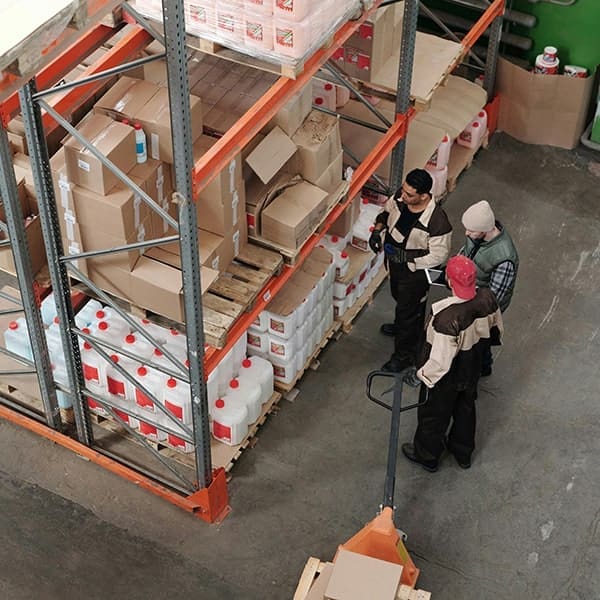
Many logistics managers work with separate tools for inbound registration, inventory management, and creating outgoing transport orders. This leads to manual transfers between systems, errors in shipment status, and loss of overview at critical moments. Especially in time-critical processes such as cross-docking, delayed registrations are immediately felt throughout the chain.
Transshipment processes where goods move from one transport mode to another are still often tracked manually or not recorded at all. The result is a poor audit trail, difficult-to-prove lead times, and limited insight into dock position occupancy. Adaption solves this by bringing all three flows, storage management, transshipment, and cross-docking, together in one warehouse system.
Adaption’s logistics solution
Adaption WMS as the foundation for storage, transshipment, and cross-dock operations
Adaption brings inbound, storage, throughput, and outbound together in one logistics system. You register every step, from truck arrival to handover to the next link in the chain, and always have up-to-date insight into what is happening in your warehouse or cross-docking point.
The 5 benefits of storage and transshipment with Adaption WMS software
1. One registration for inbound and outbound.
Whether you work with temporary storage locations, transshipment, or direct cross-docking: all incoming and outgoing flows are recorded in the same system. Planners and employees always work from the same data, without manual transfers or duplicate entries.
2. Automatic linking of shipments to transport orders.
The system automatically matches incoming shipments to open transport orders. This speeds up the cross-docking process and prevents goods from unnecessarily ending up in storage while a truck is already waiting.
3. Real-time insight into inventory management and throughput status.
At any moment, you know which goods are stored, which are being transshipped, and which are being forwarded via cross-docking. This insight is available to planners, customers, and carriers via the WMS platform.
4. Scalability during peak moments and growth.
The system works equally well at low volumes and high peaks. You add new customers, locations, or cross-dock service lines without requiring separate tools for administration.
5. Full traceability of every goods movement.
Every receipt, movement, transshipment, and dispatch is logged with time, location, and responsible employee. This makes audits and customer reporting reliable and transparent, including for external parties.

Prefer to get acquainted first or receive more information before booking a free demo?
We are happy to help, feel free to contact us.
How does storage and consolidation work in Adaption WMS?
When a truck arrives, the system registers the shipment based on the inbound file. Goods are assigned a location in the warehouse or directly allocated to an outbound line in case of a cross-docking situation. The system then monitors the status of all items until they leave the warehouse.

Storage and consolidation of goods flows
With temporary storage, goods are booked into a warehouse location and can be consolidated with other shipments for the same destination. The system supports both single locations and shared storage bins, and records batch and item information with every transaction.
- Upon receipt, weight, quantity, batch, and location are recorded so that picking and dispatch orders are always based on accurate inventory data.
- Consolidation of multiple incoming shipments into one outgoing transport order is automatically prepared based on destination and volume.
- The scan app supports employees in scanning in, moving, and scanning out goods without paper transfer forms.
Practical example: A distribution center receives daily shipments from five suppliers for the same retail customer. In the past, these shipments were manually linked to a consolidated truck. With Adaption’s WMS software, inbound files are automatically matched based on destination and delivery time. The system generates a loading order as soon as all shipments are received and approved, after which employees can load immediately without manual intermediate steps.
Cross-docking: direct throughput without intermediate storage
Cross-docking means that goods are not stored upon arrival but are immediately transferred to an outgoing transport mode. In Adaption WMS, this is controlled from the inbound file: as soon as a shipment arrives, it is automatically checked whether there is an open outgoing transport to which the goods can be linked.
The cross-docking functionality is suitable for both time-critical products and situations where storage capacity is scarce. The system supports both pre-planned cross-docking, where the link is made in advance, and opportunistic cross-docking, where the link is made upon arrival based on availability.
Practical example: A fresh produce trader receives pallets from multiple growers every morning between 04:00 and 06:00. The goods may remain in the cross-docking point for a maximum of two hours before further distribution to supermarkets. Adaption WMS links each incoming pallet directly to an outgoing route plan upon arrival. Employees see in their scan app which pallet goes to which loading zone. By 06:30, all trucks are loaded and departed, without the goods ever being placed in a storage location.
Transshipment: goods change transport mode
In transshipment, goods are transferred from one transport mode to another without intermediate storage in a warehouse. This is common in multimodal transport, where a sea vessel unloads in Rotterdam and goods are immediately transferred to an inland vessel or truck for further distribution.
Adaption’s WMS system fully records transshipment movements, including the sending and receiving transport mode, the involved handling units, and the time of transfer. This registration forms the basis for customer reporting, billing of cross-dock services, and any customs-related documentation.
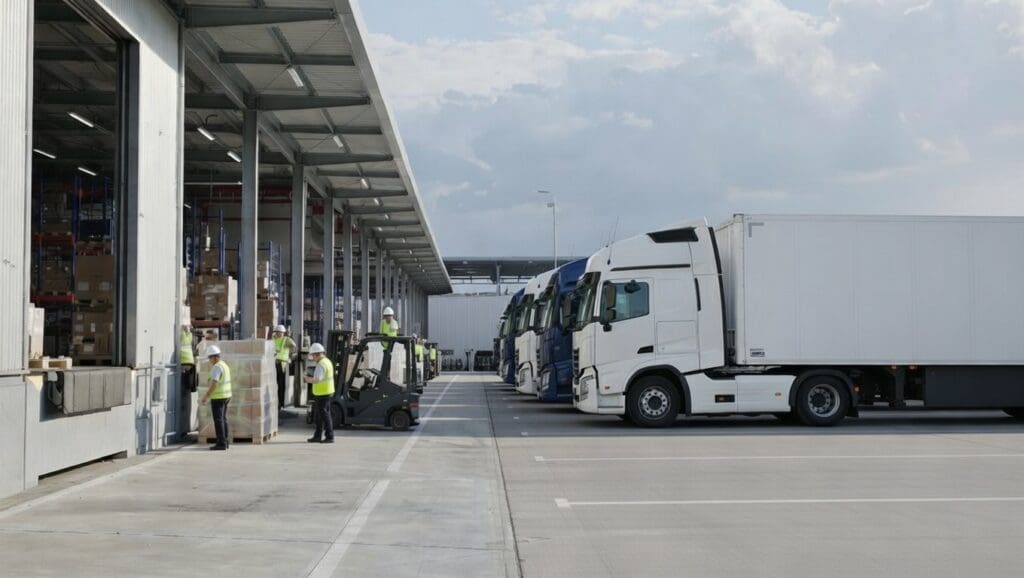
Practical example: A logistics service provider handles transshipment in the Port of Rotterdam. Containers arrive by sea vessel and are transferred to barges for inland transport. Adaption WMS records the arrival time per container, the delivery address of the barge, and the throughput time. Customers can track the status of their shipment via the Logistics Cloud Suite, while planning is automatically updated in case of delays or changes.
Seamlessly integrates with your current IT landscape
Adaption integrates seamlessly with your existing IT landscape and connects to the systems you already use. From ERP systems and webshops to carriers and accounting packages, all data flows come together in one logical whole. Thanks to open APIs, virtually any integration is possible. If your system is not listed, we make it fit.



Frequently asked questions about storage, transshipment, and cross-docking
Transshipment is the physical transfer of goods from one transport mode to another, without storage in a warehouse. Cross-docking is a specific logistics method in which incoming goods are immediately forwarded to outgoing transport, without intermediate storage. Transshipment focuses on the change of transport mode, while cross-docking is more focused on fast throughput in a warehouse environment.
Cross-docking meaning: goods arrive at a depot or cross-docking point and are immediately linked to an outgoing shipment, without being stored. In practice, incoming pallets are scanned upon arrival and automatically assigned to a loading zone for the next transport. The process requires tight planning and real-time visibility, making specialized WMS software such as Adaption’s indispensable.
A cross-docking warehouse is particularly suitable for companies dealing with perishable goods, time-critical deliveries, or high throughput volumes. Examples include fresh logistics, pharmaceutical distribution, e-commerce fulfillment, and retail replenishment. In all these sectors, speed of throughput is crucial for quality and customer satisfaction.
Storage and transshipment refer to the temporary receipt and forwarding of goods, with the emphasis on physically moving goods flows without long-term storage. In logistics, storage and transshipment are applied in ports, transshipment centers, and distribution centers where goods from multiple origins are consolidated and redistributed to multiple destinations. Adaption WMS supports this with real-time inventory management and automatic linking to transport planning.
A cross-dock service is a logistics service in which a party handles the receipt, linking, and forwarding of goods without its own storage. You can expect goods to be received, processed, and forwarded to the correct destination within an agreed time window. Adaption WMS provides logistics service providers with the tools to fully register, report, and bill cross-dock services to customers.
Adaption WMS software records all inbound and outbound movements in a cross-dock environment and automatically links them based on destination, time window, and available transport. Planners have real-time visibility of which goods have been received and which are still expected, while employees are guided through the loading and unloading process via the scan app.
Warehouse management and cross-docking are fully integrated in Adaption WMS. In the same system, you can store goods, pick orders, and handle cross-docking flows without switching between tools. This integration is valuable for companies with mixed operations, where some goods are temporarily stored and others are forwarded directly.
Discover what Adaption WMS can do for your throughput and storage operations
Schedule a free demo with Toon Schilder and discover in 30 minutes how Adaption WMS software combines your storage, transshipment processes, and cross-docking into one platform. Toon will think along with you about your specific situation and show what is possible in practice, completely without obligation.
During the demo you will gain insight into:
How the WMS works in practice
Support for your logistics processes
Options for integration and expansion
Or contact us via:
Schedule a free demo with Toon Schilder
Discover in 15 to 30 minutes how Adaption’s WMS software supports your storage, transshipment processes, and cross-docking.
"*" indicates required fields