

Sand and gravel logistics
Sand and gravel logistics in the Netherlands is changing, and that is especially noticeable in operations
On paper, sand and gravel logistics still looks like the same work. Material comes in, it has to be unloaded, separated, stored, released, and delivered again. But on the floor, everyone can feel that something is shifting. Loads no longer always arrive via the same route. Origin is less self-evident. Planning becomes a puzzle more quickly as soon as delays occur, documentation differs, or a batch turns out differently than expected.
Quick Navigation:
- Why origin is becoming more important
- You see this shift first in bulk logistics
- What more sand and gravel imports mean
- Why sand and gravel logistics is more than a Dutch story
- Construction materials logistics is also becoming more sensitive to documentation
- What the trend in sand and gravel logistics means for 2026
- Conclusion
The change in sand and gravel logistics
For construction companies and bulk storage locations, the pressure is not in big words, but in small disruptions that pile up. A different supply route often also means different arrival times, different transshipment moments, different checks, and a greater chance of exceptions. That is precisely where the core of this development lies. Dutch sand and gravel logistics is changing not only in volume, but above all in origin and corridor. And that is exactly what makes this trend relevant for daily operations in bulk logistics and construction materials logistics.
The core of this blog is simple: the supply of sand and gravel in the Netherlands relies less self-evidently on river-related extraction and more on port supply, imports, and more complex bulk corridors. In practice, this requires more control over planning, storage, and documentation.
Why the origin of sand and gravel is becoming more important in logistics
Anyone who only looks at tonnages mainly sees a market under pressure. But for practice, another question is more important: where does the material come from, and by which route does it reach the site?
That is where the real shift lies. The line that emerges from the available material is clear: less river-related extraction in the Netherlands itself, more supply via seaports and import corridors such as the Upper Rhine.
That picture became clearly visible at the beginning of 2025 in an analysis by Schuttevaer, which reported that inland shipping of construction materials in 2024 fell to the lowest level since 2011, while extraction along Dutch rivers is declining and supply via seaports and imports is increasing (Schuttevaer, 9 january 2025).

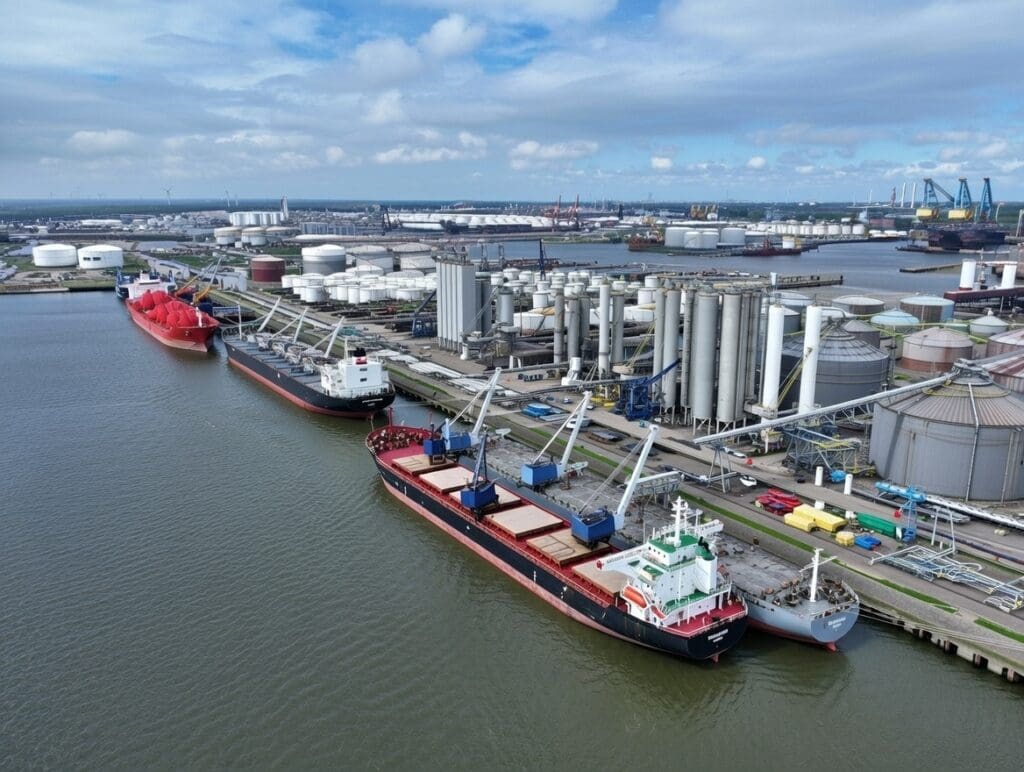
At first glance, that may seem like a nuance, but in operations it is a substantial difference. A chain that relies more heavily on imports and port supply behaves differently from a chain that rests more strongly on domestic river extraction. You get different arrival profiles, different dependencies, and often also more links between source and final destination.
That is the core of this trend: sand and gravel are not only transported, they are also supplied differently.
You see this shift first in bulk logistics
Anyone responsible for safety, continuity, and performance usually notices such changes earlier than market analyses do. Not because a major alarm suddenly goes off, but because operations become less predictable.

You can see this here, among other things:
- inbound becomes less linear than before
- ETAs become more sensitive to disruptions across multiple links
- storage locations must deal more flexibly with origin and batch separation
- document control becomes more important as the chain becomes more diffuse
- exceptions more quickly cost time, space, and attention
For a bulk storage location or construction company, that does not automatically mean everything becomes more difficult. It does mean that old certainties are becoming less self-evident. A route that was logical for years does not have to remain so. A batch that used to be scheduled without much discussion now more quickly requires extra attention for origin, release, or application.
That is precisely why this is relevant in a busy operation. Not because policy is central, but because deviations always appear at the wrong moment. A batch that comes in differently often also requires a different unloading schedule, a different control flow, and sometimes even a different place in storage.
What more sand and gravel imports mean for bulk storage and planning
As soon as the supply of sand and gravel becomes more international and more port-based, the need for operational sharpness increases. This certainly applies to construction materials, where a mistake in origin, quality, or documentation does not remain small. That mistake moves along through the chain. That is why this development affects three components at once.
Planning becomes less routine and more control
If material comes in via other corridors, the way you deploy capacity changes. Unloading windows, internal transport, buffer locations, and delivery must align better. Not everything can still be based on habit.
Separation of batches becomes more important
In bulk, mixing is rarely an administrative detail. As soon as origin and application context carry more weight, batch discipline becomes more important, both on paper and physically on site.
Proof becomes an operational issue
In these types of chains, documentation is not a paper side issue. Anyone who receives, stores, moves, or delivers a batch must be able to see what it was, where it came from, and under what status it was processed. That is not only relevant for audits, but also for the process itself, especially when pressure increases.

That need for better origin and batch information also fits broader developments in data. In 2025, Statistics Netherlands published a dataset on the extraction of surface minerals, broken down by type and geographical origin, including state waters. This makes the shift in sourcing more visible and less dependent on isolated market signals (CBS, 29 july 2025).
Why sand and gravel logistics is more than a Dutch story
The most tempting misunderstanding is that this only says something about the Dutch construction market. But the material points in another direction. Sand, stone, and gravel remain an important segment in Rhine shipping. Moreover, the Netherlands is not an isolated end market, but a link in a larger European bulk corridor.
As a result, a shift in Dutch origin and supply automatically gains broader significance. What changes here has an effect on ports, transshipment points, inland shipping planning, and storage logic elsewhere in the chain. That broader European weight is underlined by the CCNR, which also counts sand, stone, and gravel among the three most important market segments on the Rhine for 2024 (CCNR, 12 juni 2025).
That makes this trend relevant for logistics professionals who look beyond their own site. Not because every European country shows the same pattern, but because the corridor function of the Netherlands is large enough to make an operational difference.
Construction materials logistics is also becoming more sensitive to documentation and batch status
The mistake many analyses make is that they immediately jump to rules and frameworks. For practice, that is rarely the best starting point. Still, it is relevant here to mention one thing: the environment surrounding construction materials, documentation, and supervision has not become simpler.
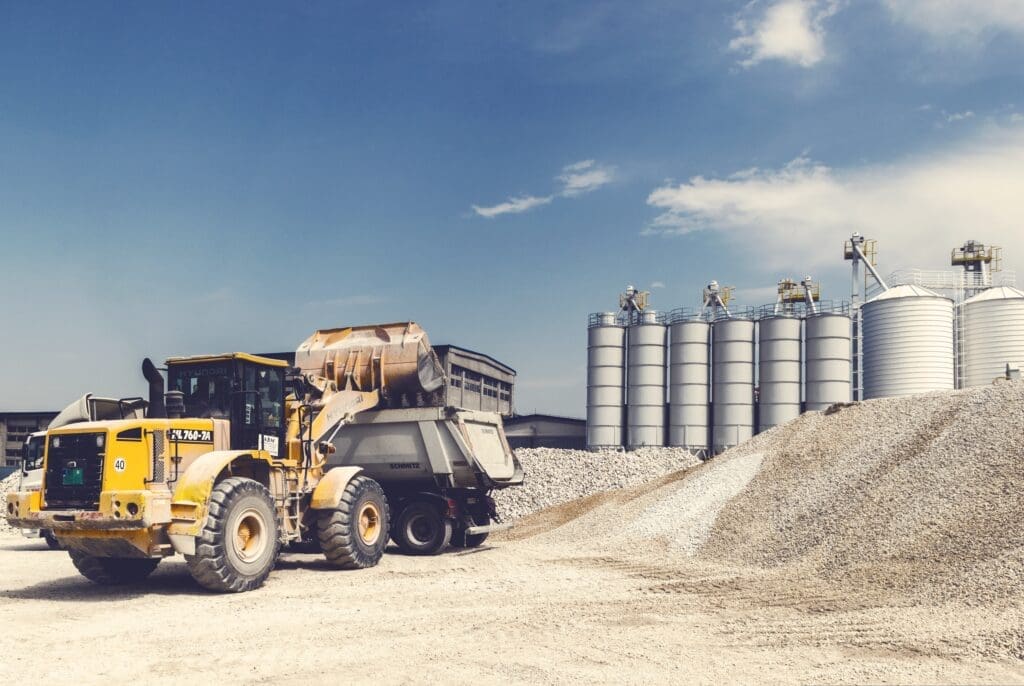
That is not the main cause of the trend, but it is one reason why the impact is felt more strongly. Since the introduction of the Environment and Planning Act, the rules around the application and reuse of construction materials, soil, and dredged material have also been adjusted. This increases the importance of proper batch identification and document control in operations (IPLO, Soil Quality Decree and Regulation).
Where origin shifts and the chain gains more links, the value of proper release, clear batch status, traceability, and consistent registration increases. Where that is not in order, small deviations pile up more quickly.
In other words: the trend does not arise because of paperwork, but paperwork does determine how manageable the trend remains in practice.
What the trend in sand and gravel logistics means for 2026
The most logical expectation is not a sudden break, but a further gradual shift. Sand and gravel remain important bulk flows. The question is increasingly less whether they are still needed, and increasingly more by which route they remain available.
For the rest of 2026, the following is therefore most likely:
- more emphasis on port-based and import-driven supply
- greater value of buffer and scenario thinking
- more pressure on batch management and document completeness
- more importance of predictable exception handling
There is something else as well. The Ministry of Infrastructure and Water Management has now also explicitly placed construction raw materials extraction in scenario studies and monitoring. That is not a detail, but a signal that the availability and origin of these flows are no longer only an operational issue, but are also being followed strategically (Dutch goverment, april 23, 2024).
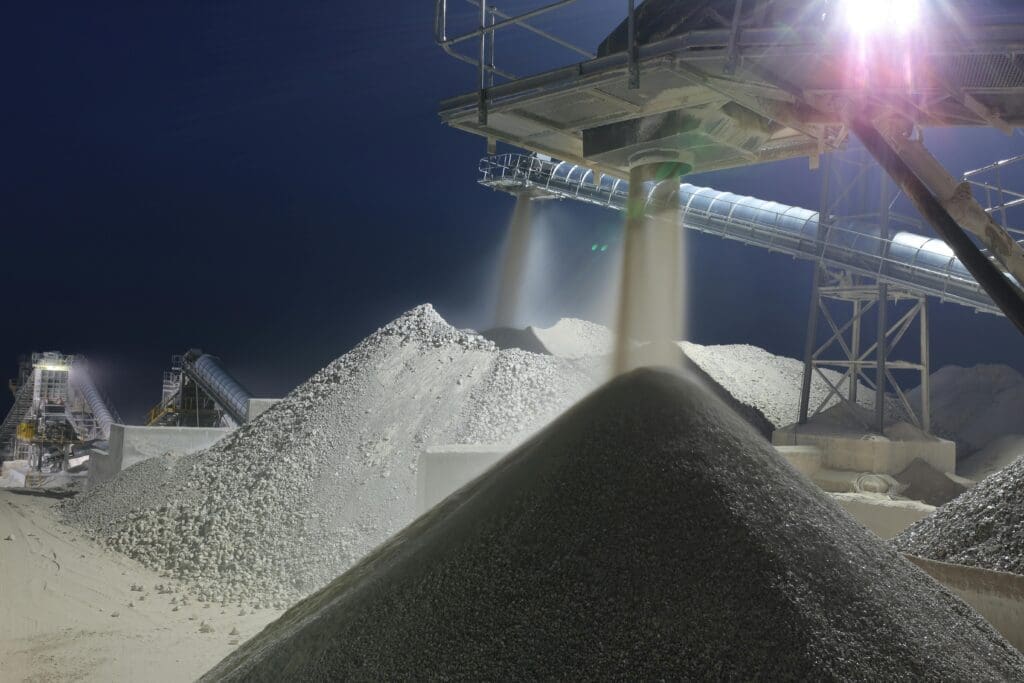
That does not have to be dramatic. But it does require a different kind of alertness. Not only to the peak itself, but to the build-up toward it. Anyone who sees this trend as a logistical shift in origin looks more sharply than anyone who sees it only as a volume story.
The question is not whether it will get busier, but whether the chain will become less self-evident
That may be the most useful observation to keep. In many operations, busyness is not the biggest problem. Unpredictability is. And that is exactly where this development affects the practice of construction companies and bulk storage locations.
If the storage of sand and gravel is less self-evidently fed by the same river-related sources and more often depends on ports and import corridors, not only does the route on the map change. What you have to organize on site to keep calm in operations also changes.
The trend of recent years therefore points to something bigger than a weak year in inland shipping. It points to a chain that is quietly, but fundamentally, changing in character. For professionals in sand and gravel logistics, bulk logistics, and construction materials logistics, that may well be the most important conclusion: not only the volume requires attention, but above all the way the chain is being redesigned.
Sources and background
- Schuttevaer, Zand- en grindvaart heeft zwak jaar achter de rug, 9 januari 2025
- CBS, Winning oppervlaktedelfstoffen, 2017-2023, 29 juli 2025
- CCNR, Plenary Session Spring 2025, 12 juni 2025
- IPLO, Besluit en Regeling bodemkwaliteit
- Rijksoverheid, Kamerbrief bij rapporten scenariostudie en monitoring bouwgrondstoffenwinning, 23 april 2024