

Logistics control tower
What is a Control Tower in logistics, and when does it add operational value?
Organizations that need to manage multiple transport flows, warehouses, carriers and customers at the same time quickly encounter fragmented information. A transport status may be stored in the TMS, inventory data in the WMS, vehicle data in a Freight Forwarding System, while additional information arrives through portals, email or Excel.
A Control Tower in logistics brings this information together and provides visibility into what is happening across the operation. The objective is not to add yet another dashboard, but to identify exceptions faster, assess their impact and take more targeted corrective action.
This makes a logistics Control Tower particularly valuable for organizations whose processes span multiple systems, locations, carriers or transport modalities.
Quick navigation:

Co-founder and Director of Adaption, expert in logistics software and process digitalization
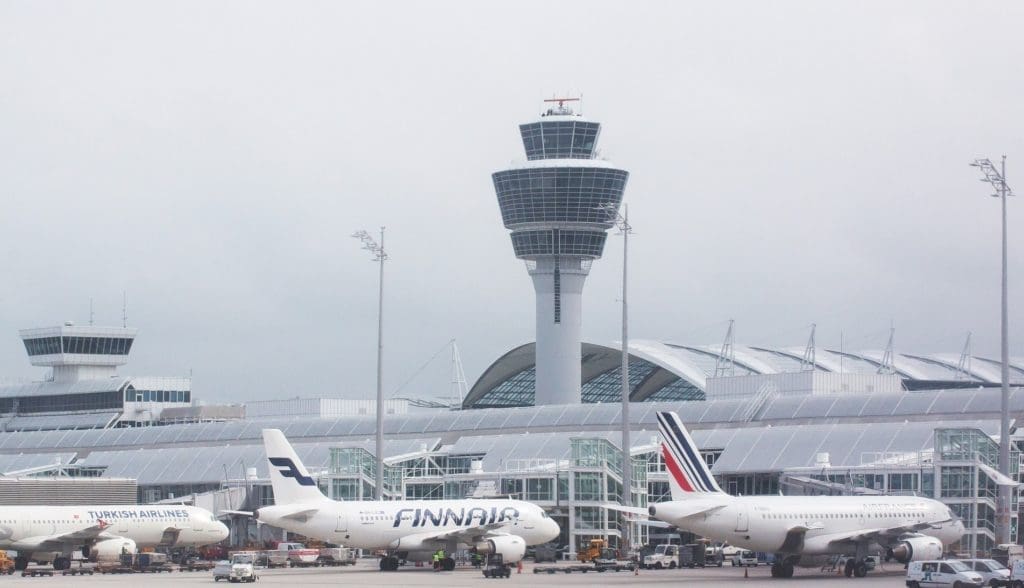
Wat is een Control Tower in de logistiek?
A logistics Control Tower is a central digital environment in which operational data from different parts of the logistics chain is brought together, analyzed and presented.
This creates an up-to-date view of business processes based on data from different information systems. These insights can then be used to improve collaboration across the supply chain and support better-informed operational decisions.
A supply chain Control Tower often goes a step further and looks beyond transport. Inventory, orders, suppliers, production, warehouses and other supply chain processes can also be included in the overview. The focus is on end-to-end visibility, identifying exceptions and supporting decision-making.
What does a logistics Control Tower do?
The exact functionality varies from one organization to another, but in practice four functions are particularly important.
1. Real-time visibility across logistics processes
The first function is to create a single, up-to-date view of the operation. This may include:
- outstanding transport orders;
- planned and actual loading and unloading times;
- current vehicle positions;
- inventory and order status;
- estimated arrival times;
- delays;
- available capacity;
- carrier performance;
- information about different transport modalities.
Without a Control Tower, this information is often spread across separate systems. Planners then have to establish the connections themselves between the TMS, WMS, Freight Forwarding Software, ERP and information from external parties.
A Control Tower brings this data together and presents it within the context of the complete logistics process.

2. Exception management
Only visibility is not enough. A screen displaying hundreds of trips provides little value to a planner if it is unclear which five trips require attention. This is why exception management plays a central role. The system identifies situations that deviate from predefined conditions. For example:
- a truck is at risk of arriving late;
- an order has not yet been loaded while its departure time is approaching;
- insufficient inventory is available for a planned delivery;
- the temperature of a shipment deviates from the required range;
- a carrier is performing below the agreed KPI.
Exception management is not just about identifying a deviation. The cause, potential impact and priority of the issue also need to be clear so that employees know which situation requires action first. This transforms the Control Tower from a passive dashboard into an operational tool.
3. KPI monitoring across systems and modalities
A logistics organization can monitor various KPIs within a single Control Tower. Examples include:
- on-time delivery;
- on-time pickup;
- average delay;
- lead time;
- load factor;
- transport costs per shipment;
- waiting time at loading and unloading locations;
- number of operational exceptions;
- inventory availability;
- performance by carrier, customer, location or modality.
The main advantage lies in combining data. A TMS, for example, may show that a delivery arrived late. By combining transport data with warehouse data, it may become clear that the actual cause of the delay was that the freight was not ready in the warehouse until two hours later than planned. This makes KPI monitoring much more useful for process improvement.
Is a Control Tower the same as a TMS or WMS?
No. A Control Tower does not normally replace a Transport Management System (TMS), Warehouse Management System (WMS) or Freight Forwarding Software.
Each of these systems has its own operational function. A TMS supports transport planning and transport execution. A WMS manages warehouse processes and inventory movements. A Freight Management System focuses, among other things, on vehicles, drivers and fleet information.
The Control Tower effectively sits above these processes. It combines information from multiple sources to provide a broader view. From a single environment, a planner can see that an order is ready in the WMS, which trip has been scheduled for it in the TMS and where the relevant vehicle is located according to the FMS. This integration between systems is one of the main reasons for using a Control Tower.
When does a Control Tower add operational value?
A Control Tower becomes particularly valuable when the complexity of the operation exceeds what employees can efficiently oversee using separate systems and manual checks.
Many different logistics flows
An organization handling a few dozen relatively predictable trips per day does not automatically need a Control Tower. This changes when hundreds of orders, multiple locations, carriers, customers and transport modes all interact. The number of interdependencies then increases rapidly.
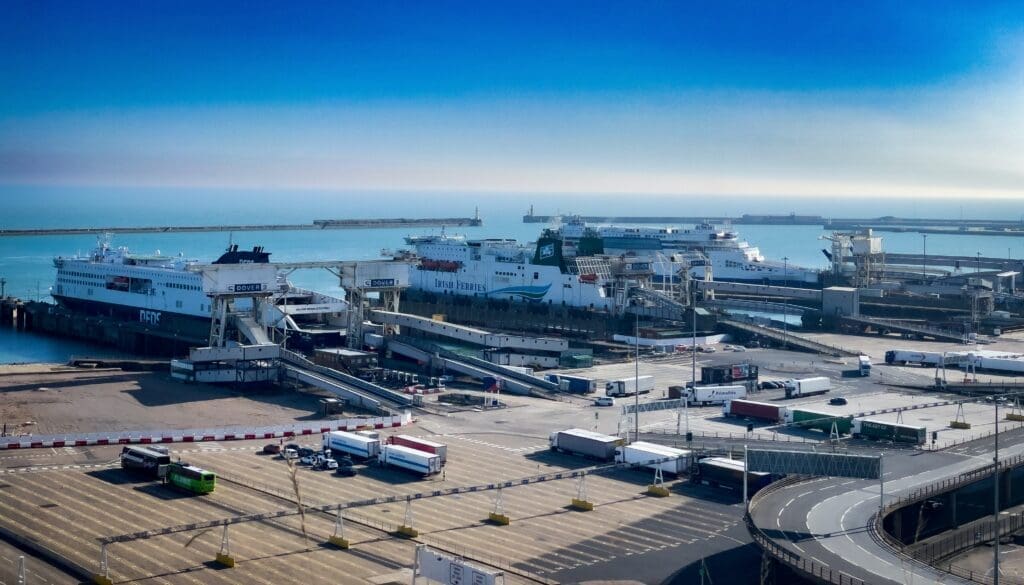
Multimodal transport
With multimodal transport, a shipment may, for example, travel consecutively by truck, inland vessel, rail and sea. A delay in one leg affects the next stage. The operational question is therefore not simply where the goods are, but also:
Which subsequent processes will be affected by this delay?
This is precisely where centralized visibility can add value.
Freight forwarding and logistics services
Freight forwarders often work with multiple carriers, customers, terminals and international partners. As a result, a significant amount of information originates outside their own organization. A Control Tower can centralize these information flows and help planners focus on shipments that genuinely require attention.
Bulk goods and complex transport planning
In bulk transport, there can also be significant interdependencies between volumes, capacity, loading locations, inventory and delivery times. A disruption at one location can immediately affect subsequent trips and vehicle availability. By making these dependencies centrally visible, organizations can take corrective action earlier.
Manufacturing companies and shippers
For a shipper, transport is often part of a larger process. A delayed delivery of raw materials, for example, can bring production to a standstill. A finished product that is not ready on time can affect a distribution center or customer. This is why a supply chain Control Tower can look beyond transport performance alone in these environments.
What data does a Control Tower need?
A Control Tower can only provide reliable information when the required data is available and trustworthy. Data quality largely determines how useful the central overview and its associated alerts are. Common data sources include:
- TMS, WMS, ERP and FMS data;
- GPS positions;
- order information;
- inventory data;
- carrier portals;
- ETA information;
- terminal and port information;
- IoT and sensor data;
- customer and supplier data.
Not every source actually needs to provide real-time data. Real-time information may be relevant for a current vehicle position, while a monthly carrier score can be calculated using periodic data. What matters more is that the frequency of the data matches the decision that needs to be made based on it.
Standards such as GS1 EPCIS are also available for sharing logistics events between different systems. This standard was specifically developed to exchange events relating to aspects such as the location, status and movement of objects between different applications and organizations.
When should you implement a Control Tower?
A useful question is not: Do we have enough transport volume for a Control Tower? A better question is:
Does our organization consistently spend too much time determining what is happening, where problems are occurring and which action should take priority?
Signs that a Control Tower may be relevant include frequent manual status checks, multiple unconnected systems, large numbers of operational exceptions, multimodal transport flows and dependency on numerous external parties.
The need for supply chain-wide KPIs can also be a reason to implement one. When management information repeatedly has to be compiled manually from different systems, there is usually no shared operational view. The size of the organization is therefore less important than the complexity of the operation and the number of relevant data sources.
Conclusion: the value of a Control Tower in logistics
A Control Tower in logistics creates a centralized operational view across systems, processes and often multiple supply chain partners. Real-time visibility is only the starting point.
The greatest added value is achieved when a Control Tower automatically identifies exceptions, makes their consequences visible and helps employees determine which situation requires attention first.
For organizations with simple and easily manageable logistics processes, this additional layer is not always necessary. However, as the number of transport flows, systems, locations, modalities and parties involved increases, centralized visibility becomes increasingly relevant.
A successful Control Tower therefore does not start with a dashboard. Its foundation consists of reliable data, effective system integrations, clearly defined KPIs and agreements on what needs to happen when an exception is identified.