

Logistics Developments
5 logistics developments from Q1 2026 that directly impact supply chains
In the first quarter of 2026, the logistics sector once again faced significant market shifts. Some developments originated outside Europe, while others came from The Hague or the Dutch market itself. However, they share one key characteristic: they all directly affect costs, availability, risk, and agility within the supply chain.
For logistics professionals, this is highly relevant because disruptions are increasingly interconnected. A geopolitical conflict influences transport prices, new legislation changes contractual relationships, digital risks move from IT to the boardroom, and location decisions are becoming less straightforward than before.
Quick Navigation:
- 1. The Strait of Hormuz impacts Dutch supply chains
- 2. Defense becomes a new and structural logistics client
- 3. The truck levy changes the cost equation in transport
- 4. Cybersecurity becomes a supply chain responsibility
- 5. The Netherlands loses ground as a location for distribution centers
- What do these five developments indicate together?
- Conclusion
The logistics shifts in Q1 2026
In this blog, we outline five notable developments from Q1 2026 and, more importantly, what they mean for logistics companies, shippers, and supply chain managers.
1. The Strait of Hormuz impacts Dutch supply chains
Why this topic is relevant now
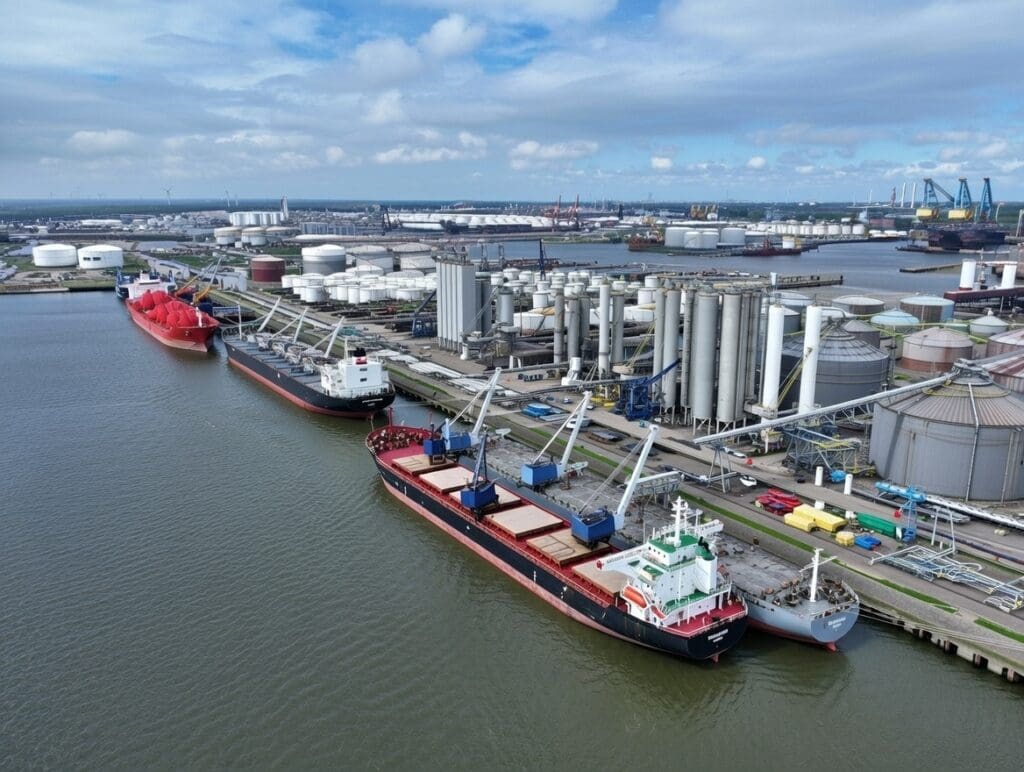
The blockage of the Strait of Hormuz is a geopolitical development with direct consequences for logistics operations. Ships are being rerouted, sailing schedules are shifting, and insurance costs are rising. Shipping lines are also applying significant surcharges, including for refrigerated transport.
This makes the situation relevant far beyond oil importers. When a key maritime corridor is under pressure, disruptions affect transport rates, capacity availability, and delivery reliability.
Why this is also felt in the Netherlands
For Dutch companies, the Gulf region may seem geographically distant, but disruptions in Hormuz have global effects. Reduced supply on the world market leads to rising prices for energy, raw materials, and transport. These increases ultimately impact European shippers, manufacturers, and logistics service providers.
Companies with:
- suppliers in Asia
- customers in the Middle East
- a strong reliance on sea freight
- energy-intensive processes
will quickly see such a disruption shift from global news to an operational issue.

What this means for logistics organizations
This development highlights the importance of risk diversification in supply chains. Companies should look beyond routes and also consider alternative suppliers, buffer stock, contractual arrangements, and surcharge structures. (Source: Sancties Libië)
2. Defense becomes a new and structural logistics client
What is changing in the market
In Q1, it became clear that the Ministry of Defense is taking concrete steps to collaborate with the civilian logistics sector. The first tender processes for logistics support are emerging, including in the heavy transport segment. This makes the previously announced Logistics Ecosystem tangible in practice. (Source: Logistiek.nl)
For transport companies, forwarders, and logistics service providers, this opens up a new playing field, not temporary, but structural.

Why this is interesting for logistics companies
Defense is seeking support in several areas, such as:
- movement-related road transport
- transshipment
- storage
- facility logistics services
This means new opportunities for logistics parties in a market that differs from the usual commercial client structure.
What this requires in practice
Working with Defense requires a different approach than working for a regular client. Consider:
- tender procedures
- stricter compliance requirements
- delivery reliability and availability
- long-term contract forms
For companies that respond well to this, it can provide a stable additional stream of clients. At the same time, it requires professionalization in processes, documentation, and risk management. (Source: Waltherploosvanamstel)
3. The truck levy changes the transport cost equation
What will happen from July 1, 2026
From July 1, 2026, the Netherlands will introduce a truck levy. This means that truck owners will pay per kilometer driven on almost all highways and on part of provincial and municipal roads. The rate is determined by several factors, including vehicle weight, emission class, and CO2 emission class.
This makes the levy more than just a fiscal measure. It becomes a clear financial incentive that directly affects decisions about fleet composition, equipment usage, and the design of logistics networks. (Source: HBP Media)
The impact of the truck levy is not limited to companies with their own trucks. Shippers and supply chain coordinators will also be affected, as carriers will incorporate these costs into rates, surcharges, and contract negotiations.
The consequences are therefore visible throughout the entire chain:
Why this goes beyond just carriers
The impact of the truck levy is not limited to companies with their own trucks. Shippers and supply chain coordinators will also be affected, as carriers will incorporate these costs into rates, surcharges, and contract negotiations.
The consequences are therefore visible throughout the entire chain:
- transport costs become less predictable
- route choices become more important
- sustainable vehicles become financially more attractive
- cost price calculations need to be redone
What this requires in practice
Those who only start calculating on July 1 are already late. The introduction forces companies to already consider:
- cost pass-through in contracts
- use of equipment
- CO2 class of vehicles
- route optimization
- network structure and load factor
For many organizations, transport optimization becomes a strategic issue rather than just an operational efficiency improvement. (Source: LCW)

4. Cybersecurity becomes a supply chain responsibility
Why the Cybersecurity Act is important for logistics
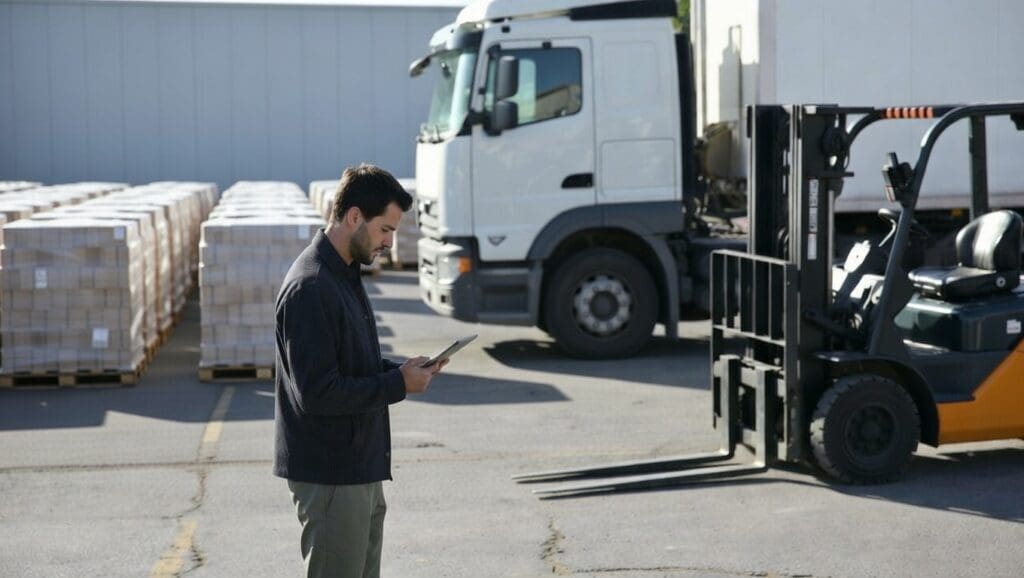
The discussion of the Cybersecurity Act makes it clear that cybersecurity in 2026 is no longer just an IT issue. Logistics processes rely on digital systems, integrations, and data exchange. Think of WMS, TMS, onboard computers, track-and-trace solutions, and supply chain platforms. (Source: Cloud)
If something goes wrong, it affects not just one organization, but often multiple links in the chain at once.
Which companies will be affected
Not every logistics company automatically falls under the law, but for a growing group of organizations, cyber resilience is indeed becoming a formal responsibility. Additionally, companies not directly in scope will still face stricter requirements from customers, partners, and clients.
This happens, for example, through:
- contractual security requirements
- supplier assessments
- audits and risk analyses
- requirements regarding incident reporting and continuity
What this means for the supply chain
The key shift is that cybersecurity no longer needs to be arranged only internally. The digital resilience of supply chain partners also matters. This makes cybersecurity a topic of collaboration, selection, and contract management.
For logistics companies, this means they must not only have their own systems in order but also take a more critical look at the parties they are digitally connected to. (Source: Escrow4all)
5. The Netherlands loses ground as a location for distribution centers
What the market shows
Market research shows that the Netherlands is becoming less obviously attractive as a location for foreign distribution centers. This development is notable, as the Netherlands has long been considered one of Europe’s strongest logistics locations.
The decline in attractiveness is linked to several factors, such as:
- rising vacancy rates
- pressure on the logistics real estate model
- uncertainty around labor migration
- spatial constraints
- broader competition from other countries
Why this is more than a real estate story
This development affects not only investors or developers. It also impacts logistics service providers, shippers, and companies reassessing their networks.
The central question increasingly becomes: where do you want to be located, and why? This involves not only the availability of space, but also:
- accessibility
- connection to industrial clusters
- labor market
- number of additional transport kilometers
- flexibility for future growth

Why location strategy is becoming important again
As the market grows less predictably, reconsidering location choices becomes more relevant. A location is not just a real estate decision but also a logistics choice affecting costs, sustainability, and service levels. (Source: Warehouse Totaal)
What do these five developments indicate together?
Looking at these five developments reveals a clear pattern: logistics is becoming more complex, more vulnerable, and at the same time more strategic. The sector is no longer just about efficiently moving goods. It is increasingly about maintaining control under changing conditions.

Q1 2026 shows that logistics organizations are facing pressure from multiple sides:
- geopolitical uncertainty
- new public clients
- changing cost structures
- stricter digital responsibility
- a less obvious location market
This requires more than just operational strength. It requires scenario thinking, better supply chain collaboration, and decisions that are not only efficient today but also sustainable tomorrow.
Conclusion: logistics trends 2026 require more control and flexibility in the supply chain
The logistics market of Q1 2026 shows how quickly conditions can shift. What once seemed stable, from trade routes to cost models and location choices, is increasingly under pressure. At the same time, new opportunities are emerging, for example in cooperation with Defense or in smarter, more sustainable transport.
For logistics professionals, the challenge is therefore not only to react but especially to look ahead. Those who identify developments early and translate them into concrete choices in transport, technology, compliance, and network strategy build a supply chain that is not only efficient but also resilient.
Sources and background
- Blocking the Strait of Hormuz threatens international trade
Source: evofenedex - Defense launches first tenders for heavy transport market
Source: Logistiek.nl - Threat requires strengthening of the armed forces and defense industry
Source: Walther Ploos van Amstel - Truck levy effective from July 1, 2026
Source: HBP Media - Truck levy
Source: LCW - NIS2 / Cybersecurity Act 2026
Source: Cloud.nl - NIS2 becomes national law, what does this mean for the logistics sector?
Source: Escrow4all - Logistics real estate Netherlands stable, but vacancy increases
Source: Warehouse Totaal