

Warehouse safety
From safe to demonstrably safe: why warehouse safety compliance is now affecting your operation
You know the moment. The cut-off shifts, the dock planning runs late, and suddenly you are dealing with ten loose ends at once. A pallet is “temporarily” standing in the walking route, an order needs to go out urgently, a malfunction report comes in at exactly the wrong time. Everyone is doing their best, but you also feel what happens then: people start improvising. Not because they are reckless, but because the operation demands it.
And then comes the audit question. Or the inspection question. Not just: “Are you working safely?” but: “Can you show that you control it structurally?” Training, work instructions, follow-up, exceptions, near incidents. The conversation shifts from intention to evidence.
Quick Navigation:
Warehouse safety compliance

The central idea of this blog is simple: warehouse safety compliance is becoming less of a feeling and more of a demonstrable process, and that changes your daily management.
This is the core, at a glance:
- Compliance is shifting from “working safely” to “demonstrably being in control.”
- Peak pressure and exceptions are the moments when safety most often breaks down.
- Ergonomics is a steering variable in output, not just an HR topic.
- Psychosocial risks are more frequently on the table due to pace, scheduling, and monitoring.
- Process and systems become the proof mechanism: training, instructions, incident follow-up, and inspections.
The real difference: you must be able to prove it
Working safely is probably not a new theme for you. You walk the floor, correct people, invest in instructions, and try to reduce risks. However, the bar is shifting. Not because safety has suddenly become “more important,” but because the environment increasingly asks for demonstrability.
There is also a societal layer to this. For 2023, Eurostat reported 3,298 fatal workplace accidents in the EU and 2.82 million non-fatal accidents resulting in at least four days of absence. Figures like these keep attention and pressure on the topic high, and policy-wise the coming years focus on strengthening and enforcing healthy and safe work. (source) You do not notice this as policy language. You notice it as a list of questions that is becoming increasingly practical.
- How do you ensure that people do not structurally work beyond their limits during peak moments?
- What happens if the standard route is not possible?
- How do you know that instructions not only exist, but are actually followed?
Key sentence to remember: Increasingly, “safe” is only truly safe if you can also explain and substantiate it.

Where things go wrong: peak pressure and exceptions
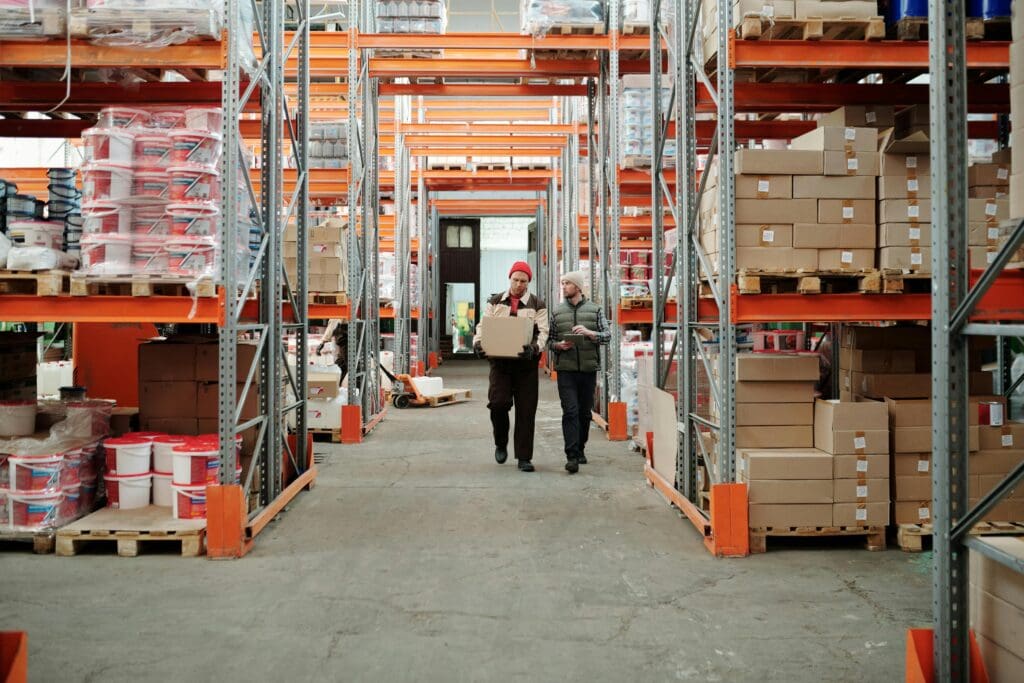
If you are honest, the risk rarely lies in the normal flow. The basic processes are often well organized. Problems arise when the system is under pressure. Think of situations you probably recognize:
- An urgent order that disrupts a walking route.
- Returns or damage that temporarily make the floor unclear.
- A malfunction in a zone where people intervene anyway because otherwise the output comes to a standstill.
- Additional temporary workers who are willing, but not yet fully in the rhythm.
What these moments have in common: they are difficult to capture in a single work instruction, yet they often determine your risk profile. As the demand for demonstrability increases, these are precisely the areas you will be questioned about. Not because someone does not understand your operation, but because supervision and audits want to see in exceptions whether your control is real. Translated into practice: you not only need a “good flow,” you need a properly functioning escalation path. And that escalation path must remain intact when it gets busy.
Ergonomics is not a “soft” side issue, it is a process parameter
Ergonomics sometimes sounds as if it stands next to the operation, something for later or for HR. In reality, it is a hard factor in your output. Not as an ideal image, but as something very concrete: How much repetition is there in a task, and what does that mean after six hours? How often do people have to twist, reach, lift or walk during a peak shift? Where are the silent overloads that you only see once someone drops out?
In the European context, physical strain has been a core theme for years, precisely because it causes so many work-related complaints. The direction is not: “We want you to plan more kindly,” but: “Show that you systematically control risks related to physical strain.” That sometimes requires difficult choices. You can make a process faster by tightening walking routes and increasing the pace. But if the boundary structure is missing, you create friction that comes back later as absenteeism, errors, incidents or turnover.
Psychosocial aspects are added, and that makes it more complex
This topic is more difficult because it quickly becomes abstract. Yet in warehouses it often plays out very tangibly. In practice, psychosocial workload concerns things such as:
- structural time pressure,
- unpredictable schedules,
- the feeling that targets are not achievable,
- perceived control or monitoring,
- tensions between teams during peaks.
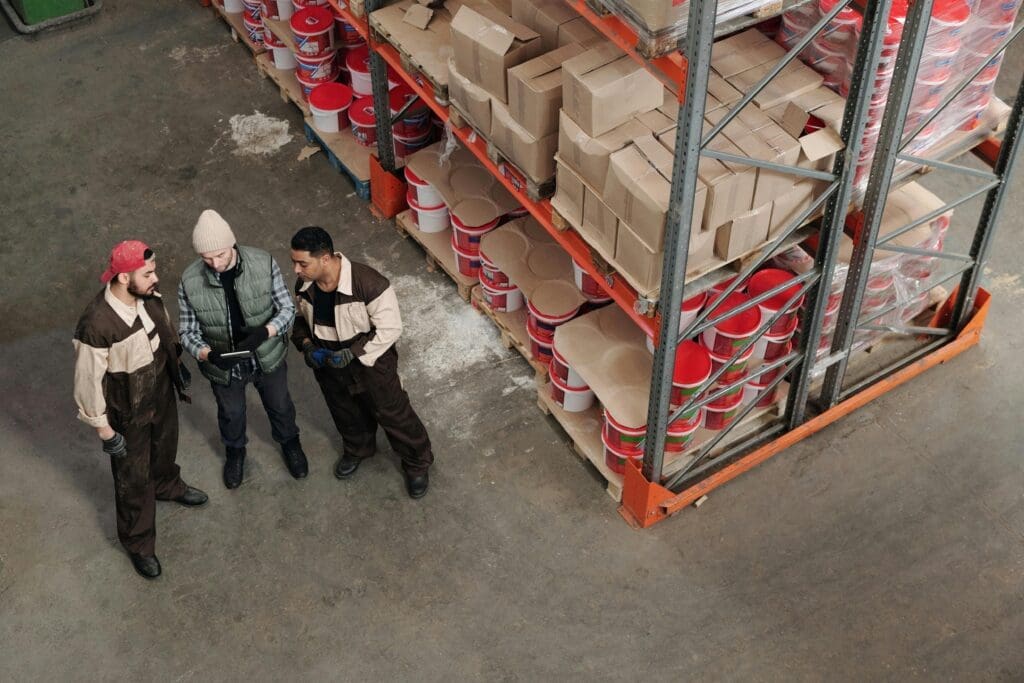
European occupational safety organizations have long emphasized that stress and mental complaints are among the most common work-related problems. It does not mean that every warehouse manager must now manage “mental health” as the main theme. It does mean that it will more often become part of risk thinking and the questions you receive. And that creates tension, because it directly touches performance management. How strongly can you steer on pace without the system breaking down?
Key sentence to remember: The more measurable your operation becomes, the more important it becomes to also understand the side effects of that measurability.
Process and IT become the proof mechanism
Without systems, you can hardly organize demonstrability properly anymore. Not because you need “more IT,” but because proof requires consistency. And consistency is difficult to deliver with memory alone, scattered lists, and verbal handovers. In practice, this concerns basic elements your operation already knows, but that must be recorded and followed up more tightly:
- Training: not only offering it, but making visible who has received what and when.
- Instructions: not only on paper, but demonstrably in use, also for temporary workers.
- Incidents and near incidents: reporting is one thing, follow-up and feedback are the proof.
- Maintenance and inspection: being able to show that equipment is safe and controlled.
- Exceptions: safe escalation paths that also work when it is busy.
The risk here is not “too little data.” The risk lies in the wrong data, or in data that does not inspire trust. Especially when monitoring plays a role, privacy and transparency come into view more quickly. That too is part of the playing field, without needing to make it bigger than necessary.

What you are likely to notice in the next 12 months
The most plausible scenario is not a sudden revolution, but a gradual tightening in practice. A few developments that fit this:
1. More emphasis on demonstrability in audits and inspections.
Not as new jargon, but as more concrete questions about follow-up, exceptions and prevention.
2. Ergonomics more often used as a benchmark for job design.
Especially where repetition and peak load are structural.
3. Psychosocial aspects more frequently on the table, especially around pace and organization.
Not always with hard figures, but as part of risk and duty of care.
It is important to remain honest: the material also shows that not everything is equally measurable, especially not warehouse-specific at EU level. But the direction is clear: the conversation partner shifts from “Are you doing your best?” to “Can you show it?”
Reflective conclusion
As a warehouse manager, you are used to thinking in terms of flow, capacity and deviations. Safety and well-being belong there, but for a long time were treated as something you arrange “on the side,” alongside performance. That era is coming to an end. The core shift is not that you suddenly have to become different, but that your system must be able to explain what you already sense in practice: where the risks lie, how you prevent them, and what you do when things threaten to go wrong.
Perhaps that is the best way to look at it: demonstrably safe working is not an extra layer on top of your operation, it is a test of whether your operation is mature enough to withstand peak pressure and exceptions without burning people out.
Critical question: if an inspector tomorrow does not ask whether you work safely, but asks for three concrete pieces of evidence that you structurally control peak pressure and exceptions, which three pieces of evidence can you show immediately?
Sources and background
European Commission
- Strategic Framework on Health and Safety at Work 2021–2027 (28 June 2021)
https://osha.europa.eu/en/safety-and-health-legislation/eu-strategic-framework-health-and-safety-work-2021-2027
Eurostat
- Accidents at work statistics (Statistics Explained, ESAW methodology, continuously updated)
https://ec.europa.eu/eurostat/statistics-explained/index.php/Accidents_at_work_statistics - Accidents at work, statistics on causes and circumstances
https://ec.europa.eu/eurostat/statistics-explained/index.php?oldid=648776 - News release, accidents at work in the EU, figures for 2023 (14 October 2025)
https://ec.europa.eu/eurostat/web/products-eurostat-news/w/ddn-20251014-1
EU-OSHA, European Agency for Safety and Health at Work
- Musculoskeletal disorders (MSD), theme page
https://osha.europa.eu/en/themes/musculoskeletal-disorders - Psychosocial risks and mental health at work, theme page
https://osha.europa.eu/en/themes/psychosocial-risks-and-mental-health - OSH Pulse 2025, digitalization and psychosocial risks
https://osha.europa.eu/en/facts-and-figures/osh-pulse/climate-digital-change - Infosheet psychosocial risks and relationship with physical strain
https://osha.europa.eu/sites/default/files/psychosocial-risks-infosheet-en.pdf
Netherlands Labour Authority
- Annual Report 2024, published 20 March 2025
https://www.nlarbeidsinspectie.nl/documenten/2025/03/20/jaarverslag-2024