

Logistics trends 2026
Logistics Trends 2026, these developments determine the future of logistics
Which logistics trends will dominate 2026 and how do you prepare for them as a logistics company?
The logistics trends of 2026 show how AI, data and automation are structurally changing the logistics sector. Technologies such as AI, BI and cloud software are becoming integral parts of daily logistics operations. At Adaption we see that logistics organizations are increasingly seeking control, scalability and flexibility in their warehouse, transport and forwarding processes. With the Logistics Cloud Suite we support companies in creating clarity and structure in complex logistics environments. In this blog we list the most likely logistics trends for 2026, based on market developments and practical experience within the logistics sector.
Quick Navigation:
Short review of the logistics trends of 2025 and the acceleration towards 2026
In the logistics trends of 2025 the emphasis was on digitizing and automating processes. Themes such as robotization, hyperautomation, big data, sustainability and chain integration were central. These developments have helped logistics companies to work more efficiently and gain better insight into their logistics operations.
In 2026 the focus shifts from implementation to optimal utilization. Where 2025 was about collecting data and setting up systems, 2026 is about smart use of that data for predictive and integrated control. AI and cloud platforms make it possible to look ahead and adjust more quickly. The logistics trends of 2026 are thus a logical acceleration of the choices made in 2025.
Trend 1: AI copilots for planning, transport and logistics become the new standard
What is an AI copilot in logistics planning?
An AI copilot in logistics planning is a smart assistant within TMS, WMS and logistics software for planning and transport that supports planners with daily decisions. Instead of just showing data, the copilot continuously analyzes historical and real‑time data and makes suggestions for route planning, loading, capacity utilization, maintenance and rates. The planner retains control, but works with data‑driven advice that ensures faster and more consistent decision‑making. In the logistics trends of 2025 we already mentioned the rise of self‑learning TMS solutions and hyperautomation. In 2026 this development takes concrete form in AI copilots for planning and transport.
Why will AI copilots be indispensable in 2026?
The broad adoption of AI copilots in 2026 is the result of two converging developments. On the one hand, logistics companies have increasingly more operational data from TMS, WMS, vehicles and sensors, the value of which is shifting from reporting to real‑time analysis. On the other hand, the complexity of logistics networks is increasing due to fluctuating demand, personnel shortages and stricter sustainability goals.
AI copilots can analyze large numbers of variables simultaneously and continuously calculate alternatives. This allows planners to respond more quickly to disruptions such as traffic jams or capacity issues, without increasing workload. Practical research shows that this approach leads to fewer empty kilometers, lower costs and less unplanned downtime. Predictive maintenance is also growing in 2026 from pilot to standard functionality within modern logistics software.
What does this mean concretely for logistics companies in 2026?
- AI‑assisted trip and route planning with a focus on efficiency and sustainability
- Smart loading advice to reduce empty space
- Dynamic replanning during disruptions
- Predictive maintenance based on vehicle and usage data
- Dynamic rate and cost calculations
For solutions such as the Logistics Cloud Suite from Adaption this means that planning, transport and forwarding will become increasingly integrated within one intelligent platform. AI supports planners here without replacing them, for example by automatically converting documents into assignments using AI.

Trend 2: from dashboards to predictive and logistics control
What are predictive dashboards in logistics?
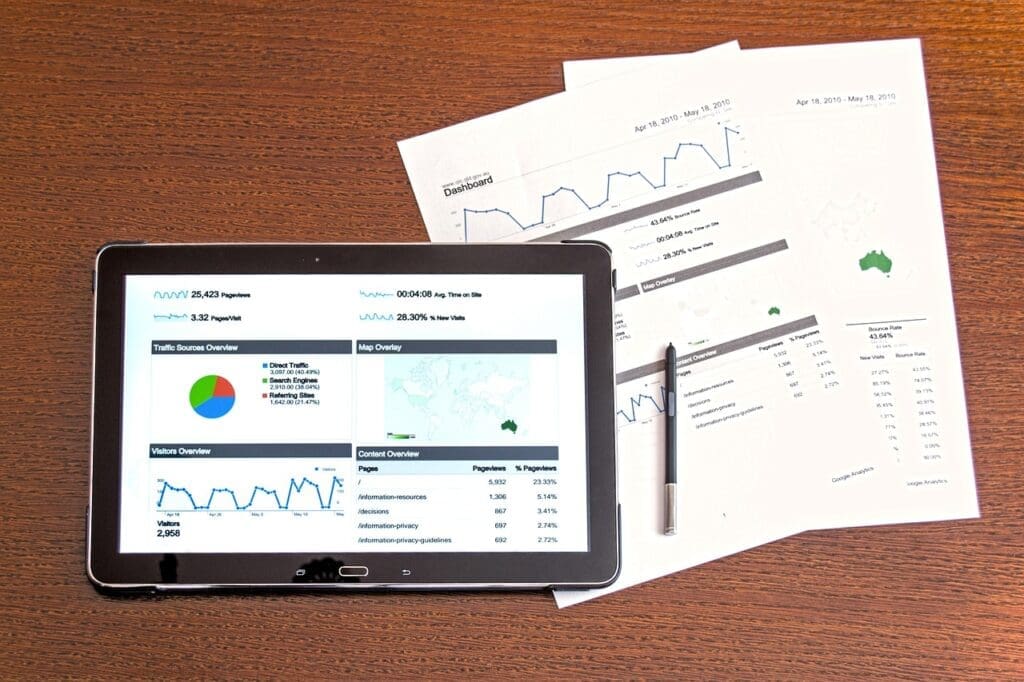
Predictive dashboards go beyond showing historical KPIs. They combine data from WMS, TMS and other logistics IT and software systems with analytics and AI to not only provide insight into current performance, but also to predict what will happen. As a result, logistics teams and supply chain planners gain early visibility into upcoming bottlenecks in capacity, inventory or service levels, supplemented with concrete control advice.
Why will predictive control become the norm in 2026?
The broad adoption of predictive dashboards is the result of the increasing availability of logistics data and the growing complexity of supply chains. Logistics organizations are faced with fluctuating demand, labor market shortages and higher demands for delivery reliability. Predictive analytics makes it possible to look ahead and adjust in time, leading to better planning and lower operational costs.
Control towers and KPI dashboards are evolving from reporting tools to active control instruments. By calculating scenarios and detecting deviations early, logistics companies can make faster and better‑substantiated decisions. In 2026 these features are increasingly standard components of modern logistics software.
What does this trend mean concretely for logistics companies?

- Real‑time dashboards with KPIs on warehouse, transport and fleet
- Better forecasting of volumes, capacity and lead times
- Scenario analyses to simulate peaks and disruptions in advance
- Concrete control advice to improve performance and service levels
For Adaption this trend means that logistics companies not only gain insight with dashboards and BI within the Logistics Cloud Suite, but also maintain control of their operations and future performance.
Trend 3: smart warehouses and robotization progress to mature automation
What do we mean by smart warehouses in 2026?
Smart warehouses in 2026 are fully integrated parts of the logistics chain and supply chain. WMS systems work closely with robots, shuttles, conveyors and other automated solutions, driven by real‑time data and smart algorithms. The warehouse evolves from an executing link to a data‑driven control center in which inventory, picking and replenishment are continuously optimized. Robotization was already an important logistics trend in 2025. In 2026 the focus shifts from standalone automation solutions to coherent, intelligently controlled warehouses where WMS, automation and data work closely together.
Why is warehouse automation accelerating towards 2026?
The further growth of warehouse automation is driven by structural personnel shortages, rising volumes and higher demands for delivery reliability. Many logistics organizations have now laid an automation foundation and have sufficient data to further optimize processes with analytics and AI.
In addition, shorter lead times and omnichannel logistics put extra pressure on warehouses. Smart warehouses make it possible to better absorb peaks, reduce errors and increase throughput without a proportional increase in personnel. The technology is mature, better integrable and more widely applicable within modern WMS solutions.
What does this trend mean concretely for logistics organizations?
- Close integration between WMS and robots such as AMRs, shuttles and sorting systems
- Data‑driven optimization of pick routes, inventory locations and replenishment
- Real‑time insight into warehouse performance such as throughput, error rates and occupancy
- More flexibility during peak load without extra personnel pressure
For Adaption this trend means that a flexible, cloud‑based WMS forms the basis for further automation. By making warehouse data and logistics process data centrally available, logistics companies in 2026 can steer smarter on efficiency, quality and scalability.

Trend 4: cloud and control towers form the backbone of the logistics chain
What does cloud‑driven logistics mean in 2026?
Cloud‑driven logistics in 2026 revolves around one central platform in which warehouse, transport and fleet processes come together. Instead of standalone systems and manual integrations, logistics and supply chain organizations work with modular SaaS solutions that exchange real‑time data via standard integrations. Control towers play a central role in this by making end‑to‑end processes transparent and supporting operational decisions.
Why does the cloud become indispensable for logistics companies and chain partners?
The increasing complexity of supply chains demands flexibility and scalability that traditional IT structures cannot provide. Cloud platforms make it possible to scale quickly, add new functionality and share data securely with partners. At the same time, they form the technical basis for AI, predictive analytics and control towers, because data is available centrally and in real time.
Logistics companies are increasingly choosing cloud solutions to respond more quickly to changes in volumes, customer expectations and regulations. Control towers are evolving from monitoring instruments to a strategic control tool that enables overview, control and collaboration in the chain.
What does this trend mean concretely for logistics companies?

- One cloud platform for WMS, TMS and FMS with real‑time data streams
- Control towers that provide insight into performance and exceptions across the entire chain
- Fast integration with carriers, customers and partners via APIs
- Better scalability and lower IT complexity
For Adaption this trend directly aligns with the vision behind the Logistics Cloud Suite. By bringing logistics processes and the IT landscape together in a modular cloud platform, organizations in 2026 gain the flexibility and transparency needed to continue growing in a data‑driven way.
Trend 5: data‑driven sustainability and CO₂ control become part of daily operations
What does data‑driven sustainable logistics mean in 2026?
Sustainable logistics in 2026 is no longer a separate reporting issue, but a permanent part of planning and execution. Logistics organizations actively manage CO₂ emissions, fuel consumption and load factors based on real‑time data. By linking sustainability to operational choices, such as route planning and mode selection, sustainability becomes concrete and applicable within daily operations.
Why is sustainability becoming increasingly data‑driven in 2026?
Pressure from legislation, customers and chain partners is increasing, forcing logistics companies to make their impact measurable. At the same time, modern TMS and planning systems make it possible to visualize emissions per trip, shipment or customer. AI and analytics help combine sustainable choices with efficiency, bringing cost control and sustainability together. In 2026 the focus shifts from reporting afterwards to actively steering during operations.
What does this trend mean concretely for logistics companies?
- Insight into CO₂ emissions per trip, order or customer
- Sustainable route and loading advice within planning software
- Support for intermodal transport and shipment consolidation
- Better substantiation of sustainability reports
For Adaption this means that sustainability and efficiency come together within one data‑driven platform. With the Logistics Cloud Suite, sustainability becomes a natural part of daily decision‑making for logistics companies, for example by working with fixed KPIs and combining trips (consolidation) via the trip plan board to reduce both emissions and costs.

Trend 6: human‑centered logistics supported by AI and automation
What does human‑centered logistics mean in 2026?
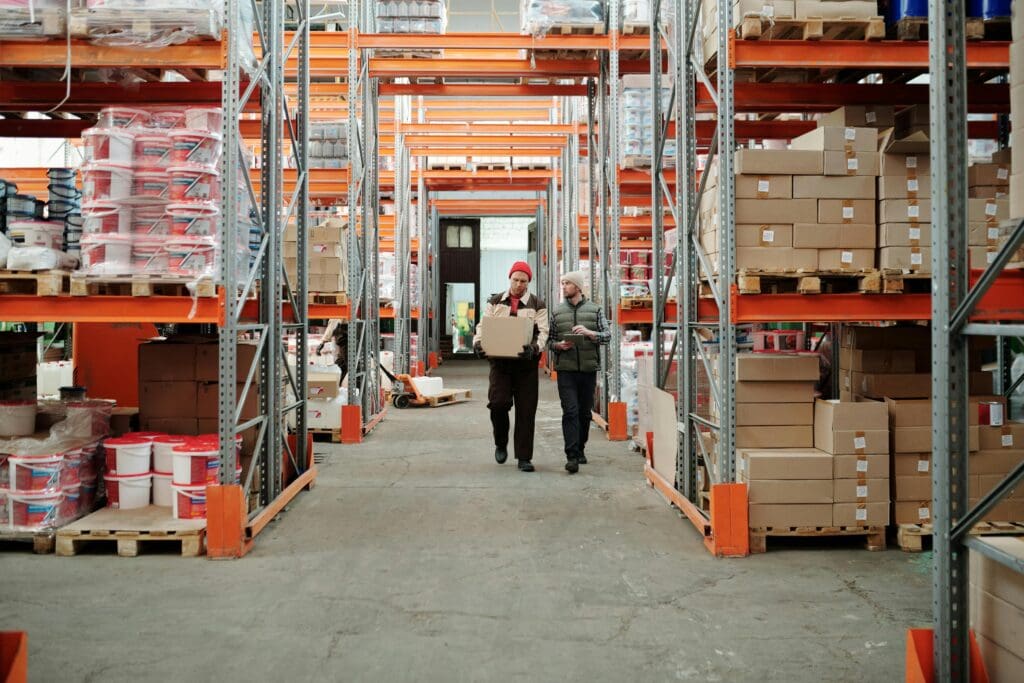
Human‑centered logistics in 2026 focuses on using technology to support employees, not replace them. AI, automation and robotization take over repetitive tasks, while planners, warehouse workers and drivers focus on exceptions, customer contact and process improvement. The human remains central, supported by better information and tools.
Why does the human factor become increasingly important?
The continuing tight labor market requires a different design of logistics processes. Technology helps reduce workload, increase safety and retain knowledge. At the same time, the use of AI and smart systems requires training, clear communication and change management. Organizations that actively involve employees achieve demonstrably greater returns from digitization. In practice, user‑friendly software, dashboards and digital assistants result in higher adoption and better performance.
What does this trend mean concretely for logistics organizations?
- AI support for planners and warehouse teams
- Less manual and repetitive work through automation
- Improved safety and ergonomics in warehouse and transport
- More focus on training and adoption of new systems
For Adaption this means that user‑friendly software and guidance during implementation are essential. Within the Logistics Cloud Suite the combination of technology, insight and human focus ensures that logistics organizations remain agile and attractive as employers in 2026.
Trend 7: resilience and risk control become strategic KPIs
What do we mean by resilient logistics in 2026?
Resilient logistics in 2026 means that logistics chains are not only designed for efficiency, but especially for coping with disruptions. Logistics organizations structure their processes so that they can switch quickly, deploy alternatives and keep the impact of risks manageable, for example with fluctuations in demand, capacity problems or IT incidents.
Why is the focus on resilience and risk growing?
Disruptions are no longer exceptions, but a structural part of logistics operations. This shifts the focus from reacting afterwards to gaining insight into risks in advance. Data, dashboards and scenario analysis make it possible to predict bottlenecks and take timely measures.
In 2026 resilience is increasingly translated into measurable KPIs, such as recovery time during disruptions, delivery reliability under pressure and dependence on critical links. Logistics software supports this by calculating scenarios and making alternative routes or plans transparent.
What does this trend mean concretely for logistics companies?
- Insight into risks and dependencies within the logistics chain
- Scenario planning for disruptions such as capacity failure or delays
- KPIs focused on delivery reliability and recovery speed
- Better decision‑making based on real‑time and predictive data
For Adaption this trend means that logistics companies with control towers and data‑driven control are better prepared for uncertainty. Within the Logistics Cloud Suite organizations gain the insight and flexibility needed to continue performing even under pressure.
Trend 8: autonomous solutions and yard automation shift from pilot to practice
What are autonomous logistics solutions in 2026?
Autonomous logistics solutions in 2026 focus mainly on defined and controlled environments, such as warehouses, terminals and company sites. Think of yard automation, autonomous vehicles on site and drones for inventory and inspections. These applications are managed from logistics software that provides real‑time insight and control.
Why are autonomous applications growing at this stage?
The technology behind autonomous solutions has matured significantly in recent years, while pressure on capacity and personnel remains high. As a result, deployment in 2026 shifts from experimental pilots to targeted applications with a clear business case.
Yard automation in particular delivers immediate benefits. By planning and monitoring movements on site more intelligently, waiting times are reduced and safety increases. Drones in warehouses support inventory and visual checks, reducing manual work and making data available faster.
What does this trend mean concretely for logistics organizations?

- Smart yard management solutions for better flow and safety
- Drones for inventory and visual inspections in warehouses
- Autonomous vehicles in closed environments with fixed routes
- Close integration between autonomous systems and WMS, TMS or FMS
For Adaption the added value lies in connecting autonomous applications with existing logistics processes. By unlocking data centrally within the Logistics Cloud Suite, these solutions can be effectively managed and utilized in 2026.
How do you prepare as a logistics company for 2026?
The logistics trends of 2026 show that progress is not in isolated innovations, but in coherence and smart choices. Preparing for 2026 therefore starts with a strong foundation.
First of all, reliable data and clear KPI control are essential. Real‑time insight into warehouse, transport and forwarding forms the basis not only to measure, but also to look ahead. Without that foundation, predictive control remains limited. It is also important to work with a cloud platform that is ready for AI and further automation. Cloud solutions offer the flexibility and scalability needed to quickly respond to changes and integrate new technologies. An effective approach is to start small with concrete use cases, such as predictive dashboards or AI support in planning. This quickly makes the impact visible and increases support within the organization. Finally, the human remains a crucial factor. By guiding employees well and making technology user‑friendly, acceptance arises and innovations are actually utilized.
Logistics organizations that now invest in data quality, cloud technology and adoption are better prepared for what 2026 demands. Adaption helps logistics organizations translate these trends into control over KPIs, better planning and future‑proof processes. With the Logistics Cloud Suite we support companies in centrally unlocking data and step by step realizing data‑driven logistics.
Want to improve your logistics?
Curious how our smart software can support your logistics processes? At Adaption, we’re happy to help with integrated solutions for warehouse, transport, and forwarding management. Feel free to contact us for more information or request a free demo.
Sources and Substantiation
This blog on the logistics trends of 2026 is based on international trend reports, market analyses, and practical insights from the logistics sector, supplemented with knowledge and experience from Adaption.
International Trend Reports and Industry Insights
DHL Logistics Trend Radar
Used for trends around AI, control towers, sustainability, workforce, and supply chain resilience.
Source: DHL Logistics Trend Radar
DHL Supply Chain, Innovation & Digitalization
Substantiation for warehouse automation, AI applications, and digital supply chains.
Source: Innovation in Logistics – DHL
Logistics Software, Automation and Cloud
Interlake Mecalux, Logistics & Warehouse Trends
Used for insights into smart warehouses, WMS development, robotization, and SaaS solutions.
Source: Interlake Mecalux – Logistics & Warehouse Trends
Trimble Transportation Insights
Substantiation for AI in transport planning, fleet management, and predictive maintenance.
Source: Trimble Transportation
Data, AI and Supply Chain Analytics
StartUs Insights, Supply Chain & Logistics Trends
Used for trends around AI, predictive analytics, digital twins, resilience, and autonomous systems.
Source: StartUs Insights – Supply Chain & Logistics Trends
Maersk, Supply Chain Analytics & Digital Solutions
Substantiation for predictive analytics, chain control, and data-driven decision-making.
Source: Maersk – Logistics Solutions
Practical Insights and Benelux Perspective
Logistiek.be, Trends and Innovation
Used for practical examples, market developments, and technology adoption in the Benelux.
Source: Logistiek.be – Trends
Internal Knowledge and Practical Experience
Adaption, Logistics Cloud Suite and Customer Experiences
Insights based on daily practice with logistics organizations in warehouse, transport, and fleet management.
Source: Adaption – WMS & TMS Software
Explanation
The sources mentioned were used to interpret and validate market developments. The interpretation and translation into concrete logistics trends for 2026 are based on a combination of external analyses and hands-on experience within the logistics sector.