

T1 fraud
T1 fraud: do you know where your shipment really ends up?
On 3 November 2026, Dutch Customs issued a warning about fraud involving the transit procedure (T1). Customs has received signals from businesses and from other European customs authorities that logistics companies are unintentionally becoming involved in fraudulent flows of goods. For example, goods are not delivered to the destination stated in the customs declaration.
This can have major financial consequences. When a T1 shipment is not properly ended, Customs starts an enquiry procedure. Companies that lodged the transit declaration can be held liable for customs duties and other charges due. Especially for products subject to high anti-dumping duties, the amounts can add up quickly.
The Dutch Customs warning is particularly relevant for freight forwarders and logistics service providers that transport goods under customs supervision.
Quick navigation:

Manager Custom Solutions at Adaption, expert in logistics software and process digitalisation
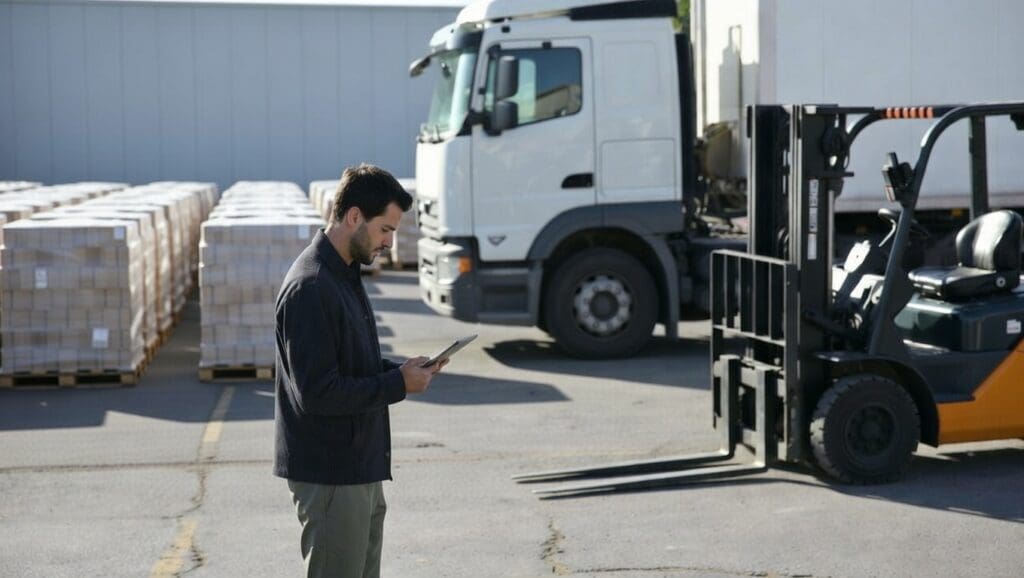
How does fraud with a T1 document work?
A T1 document is used for external transit. It allows goods that have not yet been released for free circulation in the European Union to be moved to another location under customs supervision.
Take, for example, goods leaving a customs warehouse in the Netherlands for a destination in Germany. The movement is registered in the customs system NCTS. The goods must then be presented at the destination in accordance with customs rules.
Fraudsters exploit this process. Goods may be diverted en route, for instance, or disappear from customs supervision.
According to Dutch Customs, criminals may pose as reliable trading partners, customers or carriers. They make use of existing logistics chains, which means the companies involved sometimes only discover afterwards that something has gone wrong. Customs also sees that companies lodging transit declarations do not always have sufficient insight into the customer, the flow of goods or the final handling of the transport.
1. Check who issues the transport order
An important check takes place before the goods leave. Dutch Customs advises carefully checking both new and existing customers, suppliers and logistics partners. After all, an existing business relationship is no guarantee that every new order actually comes from that party.
So verify contact details and email addresses. If you suddenly receive a transport order from an unfamiliar email address, check it with a contact person you already know.
The flow of goods also deserves attention. According to Customs, you should pay extra attention to signals that don’t fit the trade flow or usual values of goods. Does the shipment match the customer’s normal activities? And is the stated destination logical given the nature and origin of the goods?
An unexpected change of delivery address or carrier is not necessarily suspicious in itself. It is, however, a reason to check the change before processing the order further.
Finally, Customs recommends investing in staff awareness. Anyone who takes orders or prepares declarations should be able to recognise these signals.

2. Check the handover to the carrier
When goods leave a bonded warehouse or customs warehouse, the goods and the accompanying documentation must match. Check that the details on the transport order correspond with the T1 declaration, such as the description of the goods, the quantity and the stated customs office of destination.
Also make sure the consignee is fully stated in the declaration: the name, address, town and EORI number of the party receiving the goods. According to the Dutch Customs Manual (Handboek Douane), an enquiry is started with the declarant if the declaration does not make clear where the goods should have been delivered.
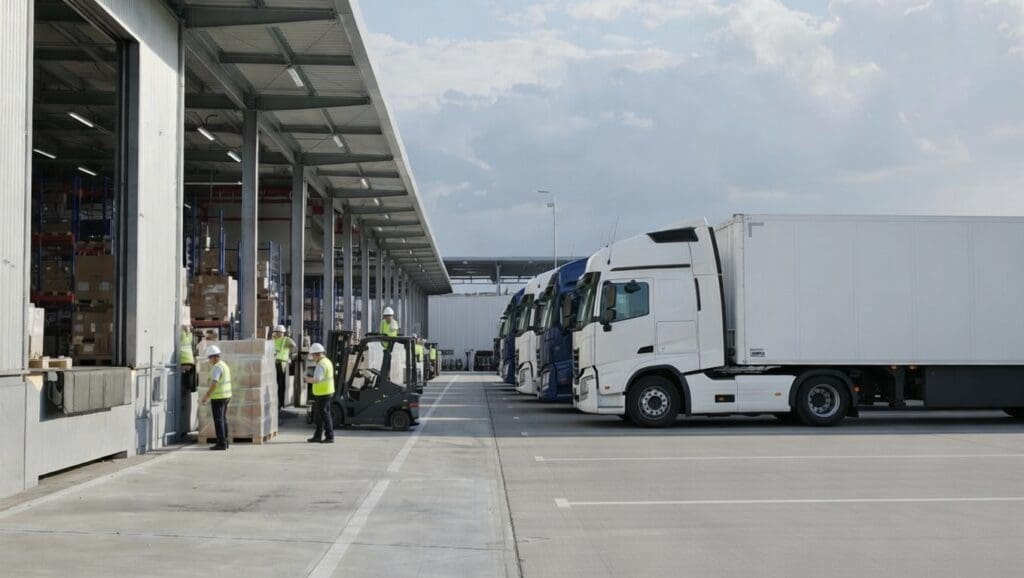
It must also be clear who is actually transporting the goods. If a subcontractor is used, you should know which party is carrying out the transport.
At handover, record the relevant details, such as the carrier, the registration number, the MRN of the customs declaration and any seals. Intact identification measures are one of the conditions for discharge of the procedure. Also check that the goods have been released for transit before they leave.
Record any changes during transport and assess whether they affect the customs procedure. A changed delivery address requires extra attention, especially if it differs from the declared destination.
This way, you can always reconstruct afterwards to whom the goods were handed over and under what arrangements they left.
3. Check that the T1 transit has been properly closed
A proof of delivery does not automatically mean the customs procedure has been properly completed. According to the Dutch Customs Manual, the procedure ends when the goods and the required information are available to Customs or an authorised consignee at the destination.
Customs then assesses whether the transit has been properly ended by comparing the data from the office of departure with that from the office of destination. If everything matches, the procedure is discharged.
For logistics companies, it is therefore wise to keep tracking the status of every T1 shipment. In the Netherlands, the declarant receives an electronic message, IE045, upon discharge. Please note that this message is for information only and is not legally binding.
If this confirmation is missing, investigate why the transit is still open. Check whether the goods actually arrived and whether the required arrival data has been processed.
Don’t wait for Customs to contact you. The deadlines are short:
- The Customs Transit Office in Heerlen, which centrally handles enquiries and discharges, may ask the declarant for information.
- The declarant must respond within 28 days.
- If the declarant provides no or insufficient information, recovery starts one month after that period ends.
By regularly checking open transit declarations, you can spot discrepancies before these deadlines start running.
Who is responsible for closing the procedure?
Several parties may be involved in a T1 shipment. A freight forwarder organises the transport, a warehouse handles the physical handover and a carrier takes the goods to their destination.
In transit, the declarant is also the holder of the procedure, with legal obligations for presenting the goods correctly. The carrier and consignee have their own obligations as well. Who fulfils which role should therefore be clear in advance.

For your internal organisation, it helps to record for each shipment who lodges the customs declaration and who follows up on it. That employee checks whether the transit has been discharged on time and contacts the parties involved if a confirmation is missing.
A practical approach is to check open T1 declarations daily and follow up on discrepancies immediately. Keep the transport documents, invoices, receipts and communications about any changes.
You will need this information if Customs starts an enquiry. The Dutch Customs Manual explicitly mentions transport documents, invoices, receipts and a correct delivery address as valuable for that enquiry.
What to do if you suspect T1 fraud?
Dutch Customs advises companies to be extra alert to anomalies in customers, carriers and flows of goods. Unexpected changes in contact details, unclear transport documents, unusual values of goods or a destination that doesn’t fit the usual trade flow deserve particular attention.
If there are indications of possible misuse, Customs advises reporting this to douane.nasporing.heerlen@douane.nl, using the subject line “Mogelijk misbruik regeling douanevervoer” (possible misuse of the transit procedure).
Check your open T1 shipments
The warning of 3 November shows why control is needed throughout the entire transport. For freight forwarders and companies with a customs warehouse, this starts with verifying the customer and ends with confirmation that the customs procedure has been discharged.
A good first step is to review your open T1 declarations from recent months. Check which shipments are still awaiting confirmation, who is responsible for follow-up and whether all transport documents are available.
For every shipment without a clear closure, you need to find out where the goods are and which customs action is still outstanding.
Bronnen en achtergrond
- Dutch Customs, Warning about fraud with the transit procedure (3 November 2026)
- Dutch Customs, Union transit
- Dutch Customs Manual, Discharge of the transit procedure
- European Commission, New Computerised Transit System (NCTS)
- OLAF, press release on VAT and customs fraud involving imports of undeclared goods (28 April 2026)