

Bulk Storage Software
Tanks are not pallets: what WMS software really needs to support for liquid bulk storage
In the world of logistics and supply chain, the same question keeps coming up more frequently: can a standard Warehouse Management System be used for the storage of liquid bulk in tanks? The question may seem technical, but the consequences for operations and regulations are significant. Operators of tank storage facilities in the chemical, food, and mineral oil industries notice that most WMS systems are built for a different reality, namely pallets, boxes, racks, and barcodes. When those same systems are used for tanks with liquids, fixed shortcomings in functionality arise.
These shortcomings are not theoretical. They affect daily operations, traceability under REACH and HACCP, safety for hazardous substances, and control toward customers and inspections. This article looks at what liquid bulk storage requires from a WMS system and why this differs from what standard systems assume.
Quick Navigation:
- Bulk logistics is a different physical reality
- Content measurement and registration
- Product separation and cross-contamination
- Batch and lot management
- Cleaning and certification status
- Excise management and fiscal administration
- Consequences of an unsuitable WMS
- What to look for when choosing a WMS
- Conclusion
Bulk logistics is a different physical reality
Warehouse logistics works from one basic principle: an item has a location and that location is either empty or occupied. A pallet is on shelf A3. A box is in drawer 7. The WMS system records movements of items to and from locations. This works well for separate units. But a tank is not a regular location. A tank has contents, and those contents change continuously without anything being physically moved. Tanks are refilled, partially delivered, and residual product remains behind. Inventory exists in a liquid and not in countable units.
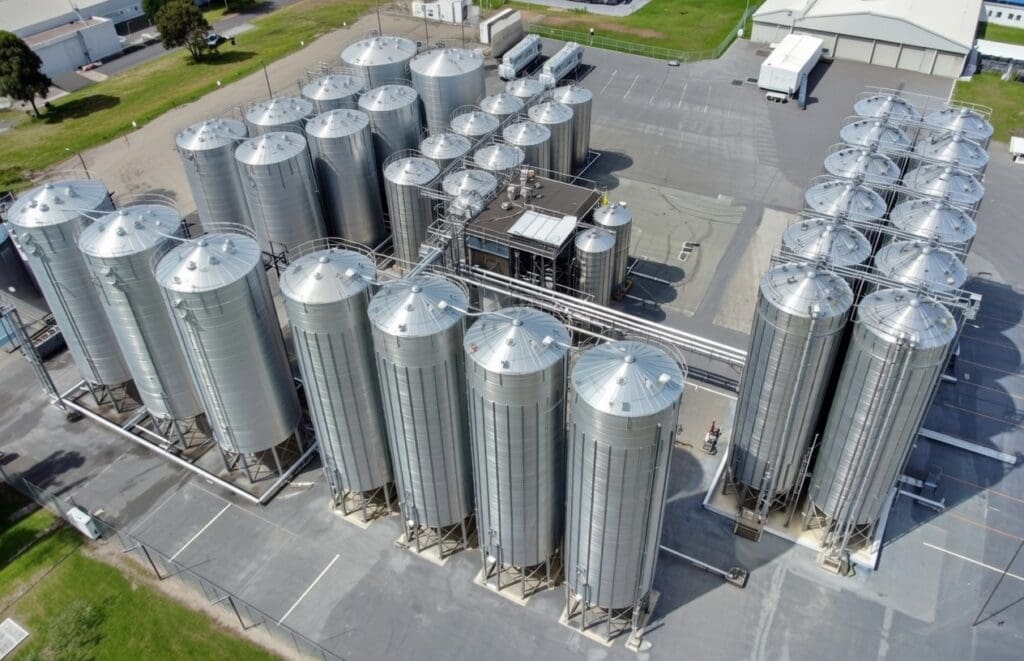
This means the foundation of standard WMS software works differently for tank storage. Concepts such as location, item, and movement must be applied differently. A tank may contain multiple batches or only one product at a time. The contents are not counted but measured, and this is done using sensors, flow meters, or weighing systems. If a WMS system does not take this into account, the administration will not match what is actually in the tank.
Content measurement and registration as core functionality
In a warehouse, registering inventory is simple. You scan and know what is stored. Tank storage works differently. You want to know how many liters are in a tank, the fill level, and how much remains after use.
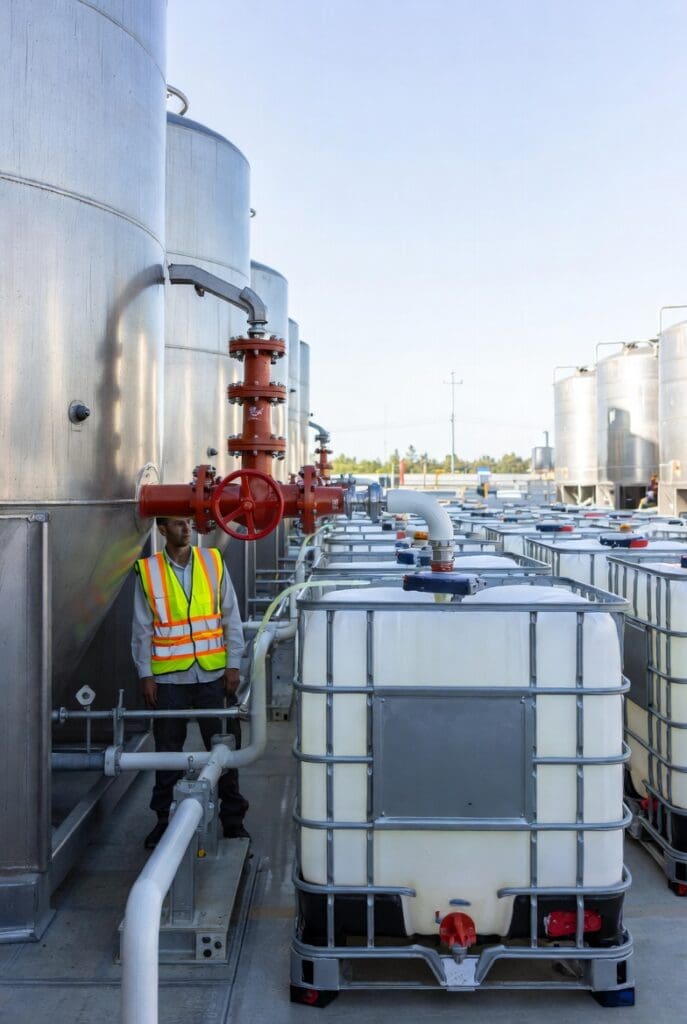
A Warehouse Management System for tank storage must retrieve this information directly from measuring equipment. This requires integration with sensors and systems that measure what is inside the tank. The system must process this data into current inventory per tank. Technically, this is very different from a standard scanning solution. Calculations also play a role, such as temperature corrections, density, and conversion from weight to volume. These are normal calculations in the process industry, but standard WMS systems often do not support them.
In addition, warehouse management software must take into account tank limits, such as maximum filling levels, minimum levels, and safety margins. These must be actively monitored and included in the planning of incoming and outgoing flows.
Product separation and cross-contamination
In liquid bulk storage, product separation is very important. It is not only about which product is in a tank, but also what was previously stored in it. Tanks are often reused for other products. A tank with vegetable oil may later contain another product, but only if it has been properly cleaned. The same applies in the chemical industry: some substances may never be stored in the same tank because of risks.
Warehouse software must actively manage this. The system must know which products may be combined and under what conditions. This requires knowledge of products, cleaning, and tanks.
Residual product also plays a role. After emptying a tank, a small amount always remains behind. This must be registered with product, volume, and status. If this is not done, inventory becomes inaccurate and unwanted mixing can occur during the next filling.
Batch and lot management under compliance pressure
For food products and pharmaceutical raw materials, batch traceability is mandatory. HACCP requires that you can show which raw materials are included in which final product. In the event of a recall, you must be able to trace which tanks and customers were involved. This means warehouse software must operate at batch level and not just at product level.
In the chemical industry, REACH plays a similar role. Here, you must be able to demonstrate where a substance comes from, how much there is, and where it goes. Without batch linkage, a WMS solution cannot properly support this.
For liquid bulk, this is especially difficult because batches can mix. The system must be able to track which batches are in a tank and in what proportions. This is not standard in WMS software, but it is daily practice in tank storage.
Cleaning and certification status as an operational variable
In a warehouse, a location is occupied or free. Tanks have multiple statuses, such as in use, empty and cleaned, empty and not cleaned, or out of service. The cleaning status determines whether a tank is suitable for a new product and must be demonstrable for customers and inspections. Warehouse management software must keep track of this status, including type of cleaning, date, and responsible person. This is not just administration, but also important for safety and quality. Incorrect registration can lead to contamination and damage.
In addition, tanks must be inspected regularly. This status must also be tracked. Without this, companies need additional systems, which can cause errors.
Excise management and fiscal administration
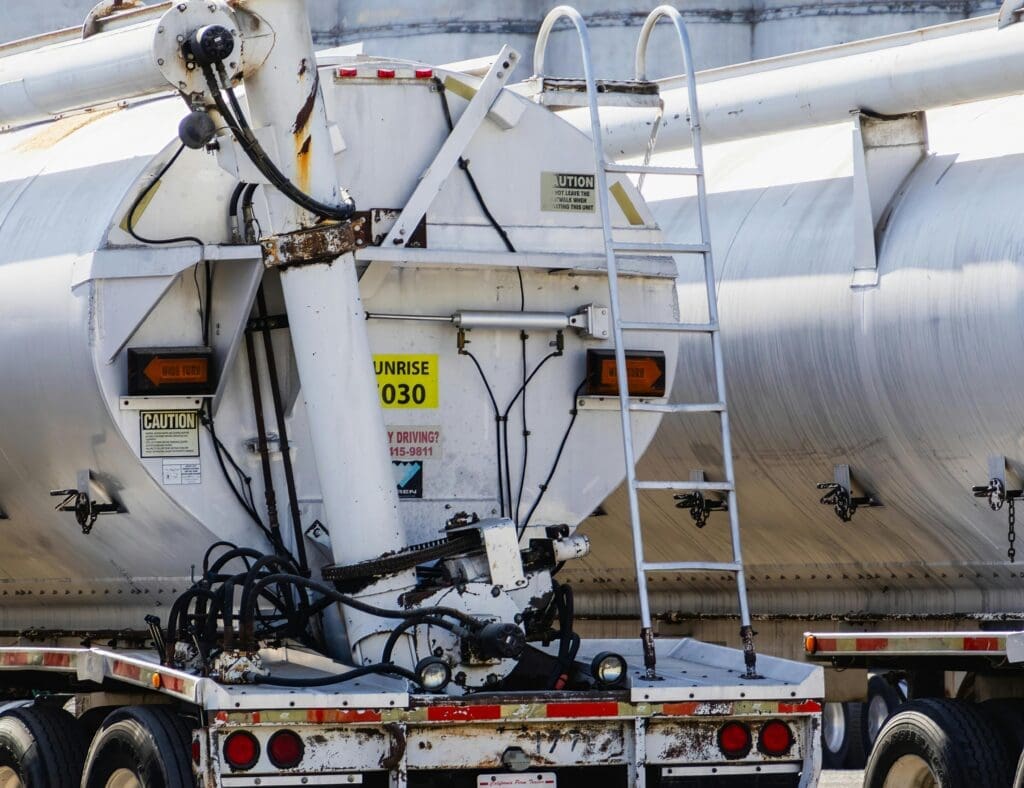
Certain liquid bulk products, such as fuels and alcohol, are subject to excise duties. This means additional rules apply for the registration of inventory and movements. WMS software must be able to convert this data into fiscal reports. The system must distinguish between different types of volumes and movements. Integration with an ERP system or excise solution is often required, but the foundation must be correct within the WMS system itself.

Consequences of an unsuitable WMS system for your bulk processes
For managers and IT professionals in tank storage, choosing the wrong Warehouse Management System can cause major problems. If you choose a system designed for standard warehouses, you will miss important functions for bulk storage. This can lead to a system that does not align well with your processes or that requires many additional customizations.
Smaller companies risk choosing mainly based on price and only later discovering that important functionality is missing. Larger companies often end up dealing with multiple systems alongside each other, which creates extra complexity and a greater chance of errors.
The WMS market is evolving, and more solutions for liquid bulk are becoming available. However, it remains difficult to assess whether these systems truly work well without extensively testing them in a real-world situation.
What should you look for when choosing a WMS for bulk storage
If you are looking for WMS software for bulk storage, it is important to first understand your own processes well. Examine how you currently handle content management, batch registration, cleaning, product separation, and compliance. Pay particular attention to where you still work manually with spreadsheets or paper and where risks arise.
Use this insight to create a clear list of requirements for your WMS system. Focus specifically on tank storage and not on standard warehouse processes. Involve employees who work with tanks daily, because they know exactly where problems can occur in practice.
During the selection of Warehouse Management Software, it is important not to evaluate systems only on paper. Test or request demonstrations of how the system handles functions such as content measurement, product rules, batch traceability, cleaning status, and integrations with other systems. Ask suppliers to demonstrate this in a realistic tank storage situation, so you can be sure the system fits your daily operations.
Conclusion: why WMS software for bulk storage has different requirements than standard warehouse management
The question is whether standard WMS software is suitable for liquid bulk storage in tanks. The answer is clear: standard WMS systems are designed for a different way of working than tank storage. That does not mean they are unusable, but they do require adaptation. Important functions such as content measurement, product separation, batch traceability, cleaning status, and compliance are not optional extras, but basic requirements.
Those who fail to properly assess this in advance will face higher costs and problems after implementation. It is therefore important to see tank storage as a separate discipline and not as a variation of warehouse management.
Sources and background
- ECHA REACH
https://www.echa.europa.eu/regulations/reach/understanding-reach - REACH explanation
Working with chemicals (REACH Regulation) - EUR-Lex food safety (178/2002)
https://eur-lex.europa.eu/eli/reg/2002/178/oj/eng - NVWA HACCP
https://www.nvwa.nl/onderwerpen/voedselveiligheid/haccp - EUR-Lex Hygiene Regulation 852/2004
https://eur-lex.europa.eu/eli/reg/2004/852/oj - PGS 15 guideline
https://iplo.nl/thema/externe-veiligheid/publicatiereeks-gevaarlijke-stoffen-pgs/pgs-15-algemene-voorschriften/
PGS 15 2025 version
PGSCustoms bonded warehouse permit (AGP permit)
Application for an excise goods warehouse permitExcise duties
Excise duty and consumption taxEmerson TankMaster software
Tank Gauging