

Zero-emissie zones
Zero-emission zones are now truly affecting planners, with the first fines and warnings issued
Your planning looks correct on paper. The vehicle is available, the trip is scheduled, and the delivery can go out. Yet in 2026, that is no longer enough. For an increasing number of urban deliveries, a trip must not only depart on time and with the right capacity, but also with the correct access rights for zero-emission zones. And that is exactly where friction is now arising.
Quick Navigation:
- The real change is not in the announcement, but in the execution
- You notice it earlier in planning
- Exemptions sometimes make the work easier, but never self-evident
- Why zero-emission zones are also a dispatch and warehouse topic
- Enforcement changes the tone
- Zero-emission zones are no longer a pilot topic
- What to expect for the rest of 2026
- Conclusion
Zero-emission zones: from policy to practice
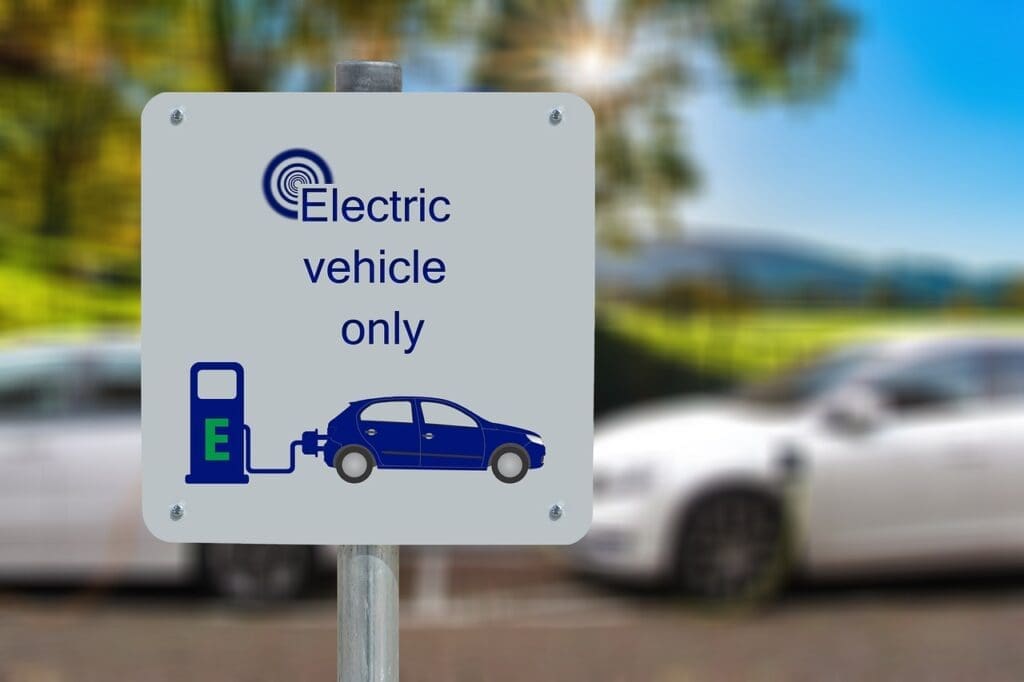
The friction became particularly visible this week. The first enforcement data on zero-emission zones has been published, including warnings and fines. This means that in certain designated urban areas, only zero-emission vans and trucks (electric or hydrogen) are allowed. As a result, the topic has quickly shifted from a preparatory issue for many logistics teams to something that directly impacts daily operations. For transport planners, this means a new reality: zero-emission zones are no longer primarily policy, but a practical factor in trip approval, exceptions, and margin for error.
The real change is not in the announcement, but in the execution
For a long time, zero emissions was mainly something that was talked about. It was part of preparation, of the question of what was coming and when companies needed to adapt. That stage is over.
What now truly makes this topic relevant is that execution has become visible. In the most recent monitoring letter from the Dutch government, dated March 20, 2026, not only is the implementation reviewed, but reference is also made to the first figures on warnings, fines, and national effects of zero-emission zones. This also changes its meaning for planners. It is no longer about an abstract future scenario, but about a set of operational conditions that can already cause trips to fail today. (Source: Dutch Government, Sixth bi-monthly monitoring letter on zero-emission zones)
That is the turning point: zero-emission zones are no longer just a rule, but an additional layer in the planning reality.

In planning, you notice it earlier than in policy
Those who plan always feel changes earlier than those who design them. Not because planners are closer to the rules, but because they are the first to absorb the consequences when theory becomes practice.
You can notice this in, among other things:
- A vehicle that is available turns out not to be deployable for an inner-city stop.
- A replacement vehicle fits in terms of capacity, but not in terms of access.
- A delivery can physically proceed, but still get stuck administratively.
These are not major system failures. They are small operational frictions. And those are precisely what accumulate during peak pressure.
For planners, this means that a trip to a city is no longer only about distance, time windows, and vehicle availability. Admissibility is now just as important. Not as a final checkbox, but as a prerequisite.
Exemptions sometimes make the work easier, but never self-evident
An important part of the change lies in the exemption practice. It has been expanded and more centrally organized in 2026. That helps, as it removes part of the fragmentation from the system. A national issuance for certain exemptions is simpler for operations than figuring out what is allowed per municipality each time.
But simpler is not the same as simple. The RDW shows on its information page about the new exemption policy that since January 1, 2026, new exemptions and adjusted conditions apply. At the same time, the municipal list and the explanation of exceptions make it clear that standardization does not eliminate all differences. For daily practice, this means: less chaos than before, but still enough room for misunderstandings, incorrect assumptions, and faulty approvals. (Source: RDW, New exemption policy from January 1, 2026)
For a planner, this may be the most difficult combination. There is just enough harmonization to think it is clear, but still enough variation to be surprised.
Why zero-emission zones are also a dispatch and warehouse topic
At first glance, zero-emission zones seem like a transport issue. But in practice, they affect more than just the trip. As soon as a delivery goes to a zero-emission zone, the question shifts from “when will this order leave?” to “is this order allowed to leave with this vehicle, at this time, under these conditions?”
This affects not only planning, but also order release, dock management, and dispatch.
The warehouse impact in the source material is mainly indirectly derived and not separately examined. Still, that inference is logical. If a trip requires different vehicle requirements, exemptions, or exception logic, then the moment at which a shipment can be safely released also changes. And in a busy operation, that almost always means additional coordination between planning, floor operations, and administration.
Zero-emission zones therefore change not only the trip, but also the way a trip is prepared internally.
Enforcement changes the tone of the topic
As long as a measure is mainly in its startup phase, there is a tendency to postpone it somewhat. There is still leniency, there are learning periods, and practice finds its way. But as soon as warnings and fines become visible, the tone changes. Then the question is no longer whether you should take the topic seriously. The question becomes where in your process the risk of error still lies.

With zero-emission zones, that risk of error usually does not lie in one major decision, but in a series of small assumptions:
- that a vehicle will probably be allowed
- that an exemption likely still applies
- that an exception works the same way in this municipality
- that someone else has already done the check
In busy planning departments, these are exactly the assumptions that become costly.
That enforcement is no longer a theoretical risk is also evident from the appendix to the monitoring letter, which compiles the warning letters sent and fines issued per local context. This gives the topic a different weight: no longer “we should take this into account,” but “we must be sure this is correct.” (Source: Dutch Government, Overview of warning letters and fines sent, including local context)
A planning error here more quickly becomes an access problem than a routing problem.
Zero-emission zones are no longer a pilot topic
Anyone who still sees zero-emission zones as a limited experiment in a few cities is now looking backward. “Op weg naar ZES” shows that multiple municipalities and Schiphol are already operating with a zero-emission zone. This is therefore no longer an exception, but a recurring condition in urban logistics. (Source: Op weg naar ZES, Where are the zero-emission zones)
As a result, the topic shifts from incident to pattern. For planners, this means that knowledge of one municipality or one exception is no longer sufficient. The topic must become part of the working method itself.
What to expect for the rest of 2026
The most logical expectation is that zero-emission zones will continue to normalize in the coming months, but will not become calmer. They will likely become more routine in operations, while the consequences of carelessness will increase.
There are roughly three possible directions
The first is controlled normalization. Planners, dispatch, and carriers become accustomed to the checks, exceptions, and vehicle choices, and zero emission becomes a normal planning constraint.
The second is increasing friction. Local differences, vehicle shortages, and exceptions continue to cause disruptions, especially in busy urban networks.
The third is that the topic shifts from trip level to network design. Then it is no longer just about which vehicle may enter a city, but also about how you structurally organize urban distribution.

This last scenario becomes especially interesting now that the Dutch government, in the same publication series, also updates the national effects of zero-emission zones for urban logistics. This shifts the perspective from individual trips to broader logistical consequences. (Source: Dutch Government, Update on national effects of zero-emission zones for urban logistics)
For a transport planner, it makes a difference which scenario becomes dominant. But in all three, the same applies: operations must know earlier what a trip will and will not allow.
The most important shift is not in the trip, but in execution
In the past, a trip was mainly a combination of capacity, route, and time. Now a fourth question is increasingly added: access. That may sound minor, but it changes a lot. Because access is not purely a traffic detail. It is a mix of vehicle status, municipal zone, exception logic, exemption, and execution discipline. As soon as that becomes a structural part of planning, the work of the planner changes with it.
That is why the most useful way to view zero-emission zones is not as mobility policy, and not only as a sustainability measure. For daily practice, they are above all a test of process control.
There is one more thing. At the beginning of March 2026, the RDW even had to explicitly warn that exemptions for zero-emission zones are only issued through the official route, because misleading commercial websites were active. This shows how quickly a policy measure in practice also becomes a governance and compliance issue. (Source: RDW, Exemptions for zero-emission zones only via the RDW)
Those who recognize this in time do not just plan a trip, but also the conditions under which that trip remains executable.
Sources and background
- Rijksoverheid, Zesde tweemaandelijkse monitoringsbrief zero-emissiezones, 20 maart 2026
- Rijksoverheid, Bijlage 2 Overzicht verzonden waarschuwingsbrieven en boetes inclusief lokale context, 20 maart 2026
- Rijksoverheid, Actualisatie landelijke effecten zero-emissiezones stadslogistiek, 20 maart 2026
- RDW, Nieuw ontheffingenbeleid vanaf 1 januari 2026
- RDW, Ontheffingen voor zero-emissiezones alleen via de RDW, 2 maart 2026
- Op weg naar ZES, Waar komen de zero-emissiezones